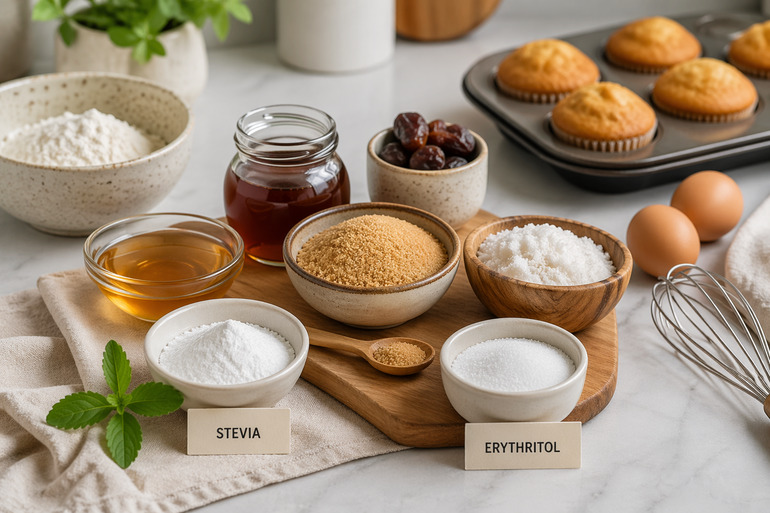
Ever tried cutting sugar from a recipe and ended up with a cake that looked good but tasted completely off? It happens more often than you’d think. Sugar quietly controls texture, moisture, and even how your baking turns out.
That’s why replacing it can feel like guesswork. One wrong swap, and everything changes. But once you understand how to replace sugar in baking the right way, it stops being confusing and starts feeling surprisingly simple.
In this guide, you’ll learn what actually works, what to avoid, and how to keep your baked goods tasting just right, even with less or no sugar.
Why sugar matters in baking (and what you must replace)
When you remove sugar, you’re removing multiple functions at once. That’s why simply “cutting sugar” often leads to poor results.
Sugar helps in baking by:
- Adding sweetness and flavor balance
- Keeping baked goods moist
- Helping browning (caramelization)
- Creating a soft, tender texture
According to the U.S. Food and Drug Administration, reducing added sugars can support better health outcomes, but replacements should be chosen wisely to help maintain baked‑good quality. So, the goal is not just to replace sweetness, but to replace function.
How to substitute sugar in recipes (step-by-step)
Replacing sugar is easier when you follow a system instead of guessing.
Start by identifying the recipe type:
- Cakes: need moisture and structure
- Cookies: need crisp edges and spread
- Muffins: need softness and balance
Then apply these steps:
Step 1: Choose the right substitute
Match your goal (natural, low-calorie, or flavor-based)
Step 2: Adjust liquid ingredients
Liquid sweeteners add moisture, so they reduce other liquids
Step 3: Watch the baking temperature
Lower it slightly when using honey or syrups
Step 4: Check texture
You may need extra eggs, flour, or fat
Step 5: Taste and refine
Small tweaks make a big difference
This method helps you consistently succeed when learning how to substitute sugar in recipes.
Best sugar substitutes for baking
Each sugar substitute for baking behaves differently, so choosing the right one depends on your recipe.
Here are the most commonly used options:
Natural Sweeteners for Baking Cakes
Natural sweeteners are popular because they feel less processed and often add extra flavor.
Common options include:
- Honey
- Maple syrup
- Coconut sugar
- Date paste
These work best in cakes, muffins, and soft baked goods.
Important note: If you’re wondering, “Can I use honey instead of sugar in baking?” so yes, but you’ll need adjustments.
Example:
- Use ¾ cup of honey for 1 cup of sugar
- Reduce the liquid slightly
- Lower oven temperature a bit
This is because honey adds moisture and browns faster.
For safety and consumption guidelines, you can refer to the European Food Safety Authority, which evaluates sweeteners used in food products.
Low-calorie sweeteners for baking
If your goal is fewer calories, low-calorie sweeteners are a better choice.
Popular options include stevia, erythritol, and monk fruit sweetener
These are much sweeter than sugar, so you use less. However, they don’t provide structure like sugar.
That means:
- Texture may be lighter or drier
- Browning is reduced
- Aftertaste may occur (in some cases)
Sugar substitute conversion chart (baking guide)
| Sugar Amount | Substitute | Equivalent Amount |
| 1 cup sugar | Honey | ¾ cup |
| 1 cup sugar | Maple syrup | ¾ cup |
| 1 cup sugar | Coconut sugar | 1 cup |
| 1 cup sugar | Stevia | 1 tsp (varies by brand) |
| 1 cup sugar | Erythritol | 1 cup |
Extra adjustments:
- Reduce liquids when using syrups
- Increase baking time slightly if needed
- Add extra binding (like eggs) if the texture weakens
Best Practices for Baking with Sugar Substitutes
If you want completely sugar-free baking, you need smart combinations, not just one substitute.
The best results often come from blending:
- Erythritol + stevia
- Monk fruit + fiber-based sweeteners
Why combinations work:
- Better taste balance
- Reduced aftertaste
- Improved texture
For baking without sugar alternatives, remember:
- Expect slight texture differences
- Focus on recipes designed for sugar-free baking
- Avoid overbaking (common mistake)
How to reduce sugar in baking without affecting taste
Not everyone wants to fully replace sugar. Sometimes, reducing sugar is enough.
The good news? You can often cut sugar by 20–30% without noticeable changes.
Here’s how:
- Use vanilla or cinnamon to boost sweetness perception
- Add fruit (banana, applesauce) for natural sweetness
- Increase salt slightly to enhance flavor
- Use dark chocolate instead of milk chocolate
In most cases, your taste buds adjust over time. What once tasted “normal” may start to feel too sweet.
This approach is simple and sustainable, especially for beginners.
Common mistakes to avoid
Even experienced bakers make mistakes when replacing sugar.
Watch out for:
- Using too much liquid sweetener
- Ignoring texture changes
- Not adjusting the baking time
- Expecting identical results
Remember, baking is part science, part practice. Small adjustments lead to big improvements.
The upshot
Learning how to replace sugar in baking is a skill that improves over time. It’s about understanding how ingredients work together.
Key takeaways:
- Sugar affects more than just sweetness
- Choose substitutes based on recipe type
- Use conversion guides for accuracy
- Start small and adjust gradually
With the right approach, you can create delicious, balanced, and healthier baked goods without sacrificing taste.