
You’ve promised yourself countless times that you’ll stop eating sugar “starting Monday.” But by Wednesday afternoon, you’re reaching for chocolate, biscuits, or another sugary coffee. If that sounds familiar, you’re not alone.
A 7-day no sugar reset isn’t about perfection or detoxing your body, it’s about breaking habits, understanding cravings, and giving your taste buds a chance to reset.
What may happen during a 7-day sugar reset?
| Day | What you may notice |
| Day 1 | Strong cravings, hunger |
| Day 2 | Mild headache, irritability |
| Day 3 | Cravings start reducing |
| Day 4 | Better energy |
| Day 5 | Foods taste sweeter |
| Day 6 | Stable appetite |
| Day 7 | Improved control over cravings |
What is a 7-day sugar reset?
A 7-day sugar reset is a short-term plan focused on cutting out added sugars, not natural sugars found in whole fruits, vegetables, or dairy. The goal is to eliminate obvious sources like soda, candy, baked goods, and sweetened drinks for one week, while eating whole, minimally processed foods instead.
The American Heart Association reports that the average U.S. adult consumes about 17 teaspoons of added sugar a day, roughly two to three times the recommended limit. Most adults eat far more added sugar than they realize. A 7-day no sugar reset is a simple, structured way to break that pattern, calm cravings, and get a clear-headed look at how sugar affects your energy, mood, and appetite.
It’s not a medical detox. Your liver and kidneys already process sugar without any special “cleanse.” Instead, think of it as a behavioral reset. Many people notice fewer cravings and steadier energy after reducing added sugar for a week, although individual experiences vary.
Added sugar vs. natural sugar
- Added sugar: Sugar and syrups added during processing or cooking (soda, candy, pastries, flavored yogurt, sauces)
- Natural sugar: Sugar that occurs naturally in whole foods (fruit, milk, vegetables), usually packaged with fiber, protein, or fat that slows absorption
The Harvard T.H. Chan School of Public Health notes that current U.S. dietary guidelines recommend keeping added sugar under 10% of daily calories. AHA suggests an even stricter cap, about 6 teaspoons (25g) a day for most women and 9 teaspoons (36g) for most men.
Foods that secretly contain added sugar
- Ketchup
- Pasta sauce
- Peanut butter
- Salad dressing
- Protein bars
- Breakfast cereals
- Bread
- Flavored oatmeal
- Yogurt
- Coffee creamers
Who should try it?
This plan is designed for beginners and works well if you:
- Feel like you crave something sweet after every meal
- Rely on soda, energy drinks, or sweetened coffee daily
- Want to lose the “3 pm crash” that follows a sugary lunch
- Are you curious how much better you might feel without daily sugar
- Want a low-risk way to reset habits before a longer-term diet change
Who should be cautious or check with a doctor first
- People with diabetes or hypoglycemia (blood sugar swings need medical supervision)
- Anyone with a current or past eating disorder, restrictive “detox” framing can be triggering
- Pregnant or breastfeeding individuals
- Anyone on medication where diet changes could affect dosing
If any of these apply to you, talk to a doctor or registered dietitian before starting.
Foods to eat
- Protein:
Eggs, chicken, turkey, fish, tofu, plain Greek yogurt, and cottage cheese should form the base of every meal. Protein can help increase fullness and may make cravings easier to manage. It also helps stabilize blood sugar, which is one of the main drivers of sugar cravings in the first place.
- Non-starchy vegetables:
Spinach, broccoli, peppers, zucchini, cauliflower, and cucumber add volume, fiber, and nutrients without spiking blood sugar. Aim to fill half your plate with these at lunch and dinner. They also help you feel physically full, which makes it easier to skip dessert.
- Whole fruits (in moderation):
Berries, apples, and pears are good choices because their natural sugar comes packaged with fiber, which slows absorption into the bloodstream. Stick to one or two servings a day rather than unlimited amounts, and always choose the whole fruit over juice.
- Healthy fats:
Olive oil, avocado, nuts, seeds, and unsweetened nut butter add satisfaction and help you feel satisfied after meals. Fat slows digestion, which means steadier energy and fewer sudden cravings a couple of hours after eating.
- Whole grains:
Oats, quinoa, brown rice, and whole-grain bread provide steady energy throughout the day. Just double-check labels on packaged whole-grain products, since many breads and cereals sneak in added sugar even when they look “healthy.”
- Legumes:
Lentils, chickpeas, and black beans are affordable, filling, and high in both protein and fiber. They’re an easy way to bulk up soups, salads, and bowls without needing anything sweet to make a meal feel satisfying.
- Unsweetened drinks:
Water, sparkling water, black coffee, and plain tea should replace anything sweetened. If plain water feels boring, add a slice of lemon, cucumber, or a few mint leaves for flavor without any added sugar.
Foods to avoid
During your 7-day reset, avoid foods and drinks with added sugars or highly refined carbohydrates that can trigger cravings and blood sugar spikes.
- Sugary drinks: Soda, sweetened juices, energy drinks, and sweetened coffee or tea are among the largest sources of added sugar.
- Sweets and baked goods: Candy, chocolate bars, cookies, cakes, pastries, and desserts.
- Sweetened packaged foods: Flavored yogurt, sugary cereals, granola bars, and instant oatmeal.
- Sugary sauces and condiments: Ketchup, barbecue sauce, sweet chili sauce, and many bottled salad dressings.
- Refined grains: White bread, white pasta, and other refined flour products, which are digested quickly and may increase cravings.
- Alcoholic drinks: Cocktails, sweetened mixers, and dessert wines often contain significant amounts of added sugar.
- Natural sweeteners: Honey, maple syrup, agave nectar, and coconut sugar still count as added sugars during the reset.
According to Cigna’s health library, a single 12-ounce can of soda can contain 8–9 teaspoons of added sugar, nearly a full day’s recommended limit in one drink.
How to spot added sugar on labels
Added sugar may appear as:
- Corn syrup
- High fructose corn syrup
- Cane sugar
- Dextrose
- Maltose
- Rice syrup
- Brown rice syrup
- Honey
- Agave
- Molasses
Grocery list
| Category | Foods |
| Protein | Eggs, Chicken, Fish |
| Fruits | Apples, Berries |
| Vegetables | Spinach, Broccoli |
| Healthy Fats | Avocado, Nuts |
| Drinks | Water, Tea |
Meal plan
This meal plan is designed to help you eliminate added sugar while enjoying balanced, satisfying meals. Each day includes protein-rich foods, fiber, healthy fats, and whole-food carbohydrates to keep your energy stable and reduce sugar cravings. Feel free to adjust portion sizes based on your age, activity level, and calorie needs.

Daily goals
- Drink 2–3 liters (8–10 cups) of water each day.
- Include a source of protein with every meal.
- Fill half your plate with non-starchy vegetables at lunch and dinner.
- Choose whole fruits instead of fruit juice if you’re craving something sweet.
- Aim for 20–30 minutes of light physical activity daily.
- Get 7–9 hours of quality sleep to help manage cravings and support recovery.
Day 1: Clearing out added sugar
Focus: Expect the strongest cravings today. Staying hydrated and eating enough protein can help keep hunger under control.
| Meal | Foods |
| Breakfast | Scrambled eggs with spinach and avocado |
| Lunch | Grilled chicken salad with olive oil and lemon dressing |
| Dinner | Oven-roasted salmon served with steamed broccoli and a side of fluffy quinoa |
| Snack | A handful of almonds or one medium apple |
Day 2: Staying consistent
Focus: Mild headaches or fatigue are common during the first few days. Stick to balanced meals and avoid skipping meals.
| Meal | Foods |
| Breakfast | Plain Greek yogurt with berries and chia seeds |
| Lunch | Turkey and vegetable lettuce wraps |
| Dinner | Stir-fried tofu with mixed vegetables and brown rice |
| Snack | Cucumber slices with hummus |
Day 3: Cravings start to ease
Focus: Your taste buds may begin adjusting, making naturally sweet foods like fruit taste more satisfying.
| Meal | Foods |
| Breakfast | Unsweetened oatmeal with cinnamon and sliced pear |
| Lunch | Lentil soup with a side salad |
| Dinner | Grilled chicken with roasted cauliflower and sweet potato |
| Snack | A serving of cottage cheese paired with a handful of fresh berries |
Day 4: Building healthy habits
Focus: Consistency is key. Balanced meals today can help maintain steady energy levels throughout the day.
| Meal | Foods |
| Breakfast | Vegetable omelet with peppers and onions |
| Lunch | Quinoa bowl with chickpeas, cucumber, and olive oil dressing |
| Dinner | Baked white fish with sautéed spinach and brown rice |
| Snack | A small handful of walnuts |
Day 5: Feeling more energized
Focus: Many people begin to notice fewer afternoon energy crashes and reduced cravings by this stage.
| Meal | Foods |
| Breakfast | Smoothie made with unsweetened almond milk, spinach, half a banana, and natural peanut butter (no added sugar) |
| Lunch | Homemade chicken and vegetable soup |
| Dinner | Turkey chili (without added sugar) served with a mixed green salad |
| Snack | Plain Greek yogurt sprinkled with cinnamon |
Day 6: Strengthening new habits
Focus: Continue choosing whole foods and avoid processed snacks to reinforce healthier eating habits.
| Meal | Foods |
| Breakfast | Boiled eggs with whole-grain toast and avocado |
| Lunch | Grilled fish tacos on corn tortillas with cabbage slaw |
| Dinner | Chickpea and vegetable curry served over brown rice |
| Snack | Apple slices with natural almond butter |
Day 7: Finishing strong
Focus: Congratulations! Use today to reflect on how your cravings, energy, and eating habits have changed over the past week.
| Meal | Foods |
| Breakfast | Overnight oats with unsweetened almond milk, chia seeds, and berries |
| Lunch | Mediterranean salad with grilled chicken, olives, cucumber, tomatoes, and feta cheese |
| Dinner | Roasted chicken thighs with mixed vegetables and quinoa |
| Snack | A handful of mixed nuts |
Quick tip
Don’t worry if your meals don’t look exactly like this plan. The goal isn’t perfection, it’s building a sustainable habit of choosing whole, minimally processed foods while avoiding added sugar. Small, consistent changes are more effective than following a perfect meal plan for just one week.
Managing cravings
Cravings usually peak during the first 2–3 days of cutting back on added sugar and gradually become easier to manage. These strategies can help you stay on track:
Don’t go cold turkey on flavor.
Use cinnamon, vanilla extract, or whole fruit to add natural sweetness without relying on added sugar.
Stay hydrated.
Thirst is often mistaken for hunger or sugar cravings. Drink a glass of water first and wait 10–15 minutes before reaching for a snack.
Eat enough protein and healthy fats.
Protein, fiber, and healthy fats help keep you full and stabilize blood sugar, making cravings easier to control. Research suggests that higher-protein diets can improve satiety and reduce food cravings.
Prioritize sleep
Poor sleep increases hunger hormones and cravings for sugary foods. Aim for 7–9 hours of sleep each night to support appetite control.
Expect some rough days.
Headaches, irritability, and cravings are common during the first few days but usually improve as your body adjusts to eating less added sugar.
Common mistakes
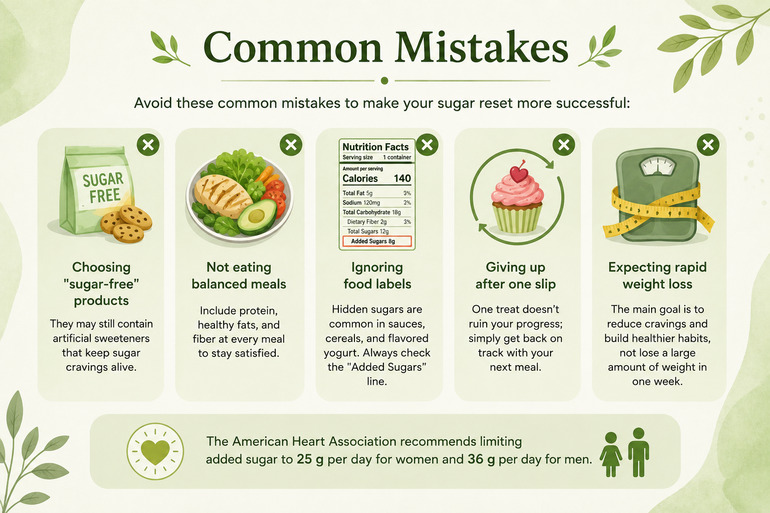
Avoid these common mistakes to make your sugar reset more successful:
- Choosing “sugar-free” products: They may still contain artificial sweeteners that keep sugar cravings alive.
- Not eating balanced meals: Include protein, healthy fats, and fiber at every meal to stay satisfied.
- Ignoring food labels: Hidden sugars are common in sauces, cereals, and flavored yogurt. Always check the “Added Sugars” line.
- Giving up after one slip: One treat doesn’t ruin your progress; simply get back on track with your next meal.
- Expecting rapid weight loss: The main goal is to reduce cravings and build healthier habits, not lose a large amount of weight in one week.
The American Heart Association recommends limiting added sugar to 25 g per day for women and 36 g per day for men.
What to do after day 7
Completing your reset is just the beginning. To maintain your progress:
- Reintroduce sugar gradually instead of returning to old habits all at once.
- Stay within recommended added sugar limits whenever possible.
- Keep the healthy swaps that worked, such as fruit instead of dessert or unsweetened drinks.
- Repeat the reset when needed, especially after holidays or vacations.
- Focus on long-term habits rather than short-term perfection.
The Dietary Guidelines for Americans recommend keeping added sugar below 10% of total daily calories.
FAQs
Some people lose a few pounds, mostly from reduced calorie intake and less water retention, but the main benefit is fewer cravings and more stable energy, not dramatic fat loss.
Yes. Whole fruit contains natural sugar along with fiber, which slows absorption. Fruit juice is not recommended because it removes fiber and concentrates sugar.
They’re generally allowed in moderation, but many people use a sugar reset as a chance to reduce reliance on all sweeteners, artificial or otherwise, since the evidence on their long-term effects is still mixed.
It’s possible, especially in the first few days. This is usually temporary and related to blood sugar and brain chemistry adjustments, not a medical emergency. Staying hydrated and eating enough protein can help.
Yes, though your energy may dip slightly in the first few days. Light to moderate exercise is fine; consider easing up on intense training until day 3 or 4 if you feel fatigued.
Reducing added sugar is generally healthy at any age, but a structured 7-day “reset” framed as a diet isn’t necessary or recommended for children. Focus on gradually reducing sugary drinks and snacks instead.