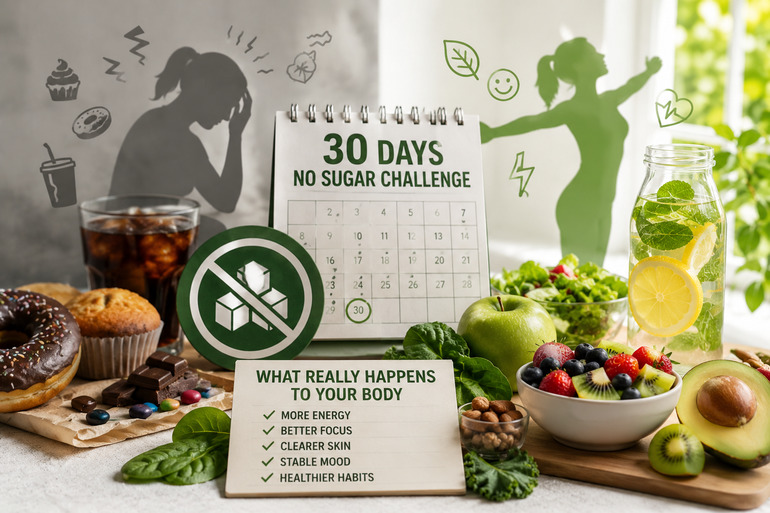
Sugar is everywhere. It sneaks into coffee, sauces, breakfast cereals, protein bars, and even into “healthy” foods. Too much added sugar can have an impact on energy, cravings, mood, and food consumption behaviors, and many people consume much more than they realize.
As a result, the concept of the “no sugar challenge” is becoming increasingly popular. So what really happens when you quit sugar for 30 days?
Here, we uncover the facts backed by scientific research, what to expect when trying to break the sugar addiction, why it is so difficult, and common sugar withdrawal symptoms.
What happens during the first few days without sugar?
The first few days can be uncomfortable, particularly if you have a habit of consuming sugary foods and beverages often.
Your body begins to change to another source of energy. Rather than rapidly increasing blood sugar, it starts to turn to a more balanced diet of meals and slower digestion.
Common sugar withdrawal symptoms
Some people experience mild symptoms, while others notice greater changes.
Common sugar withdrawal symptoms include:
- Headaches
- Fatigue
- Irritability
- Mood swings
- Brain fog
- Strong sugar cravings
- Trouble concentrating
These symptoms are usually temporary.
Why do energy and mood change?
Sugar can cause rapid fluctuations in blood sugar. A sudden decrease in sugar can require the body to rebalance blood sugar.
That’s why some will feel tired or off in the first week. Generally, these feelings begin to get better over time.
Week-by-week changes after quitting sugar
Some people see different changes happening each week. The experience is different for each person, but there are some patterns.
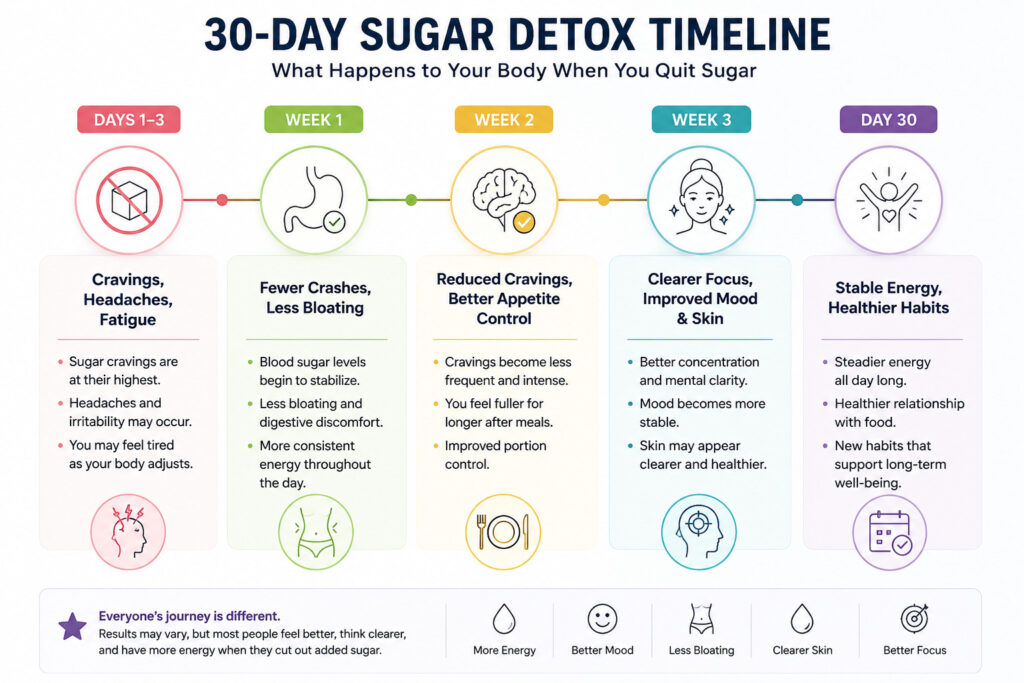
Week 1: Fewer energy crashes and less bloating
Typically, the first week is the most difficult.
While cravings may still be strong, some people begin noticing:
- Less bloating
- More stable hunger levels
- Fewer sudden energy crashes
- Better awareness of eating habits
Research suggests that some individuals describe the first week as surprisingly frustrating because cravings can appear even when they are not physically hungry. This is often when people realize how often they previously reached for sugar automatically.
Week 2: Reduced cravings and better appetite control
Cravings may start to settle down by the second week.
Foods that were previously not sweet enough may appear to be sweeter. Others also experience greater satisfaction following a well-rounded meal that contains protein and fibre.
This aspect can help to make a low-sugar diet more attainable and sustainable over the long term.
Week 3: Improved focus, mood, and skin health
During week three, many people report improvements in daily focus and mood stability.
Some individuals also notice changes in skin appearance. Research suggests that diets high in added sugar may contribute to inflammation in some people, which can affect skin health.
While results vary, some common experiences include:
- Clearer-looking skin
- Better concentration
- Less brain fog
- Improved sleep quality
By Day 30: Better eating habits and more stable energy
After 30 days, many people say their food cravings feel different.
They may:
- Reduce the number of times you crave sweets.
- Have a greater sense of satisfaction after eating.
- Snack less frequently
- Learn how to maintain more consistent energy levels throughout the day.
How long do sugar withdrawal symptoms last?
Everyone has their own time frame. The side effects of sugar addiction can differ from individual to individual.
For many people:
| Symptom | Typical Adjustment Time |
| Cravings | Several days to 2 weeks |
| Headaches | 2–7 days |
| Fatigue | 1–2 weeks |
| Mood changes | Several days to 2 weeks |
Why is quitting sugar so difficult?
Sugar is more than a taste. It also impacts the brain’s reward system.
Studies have indicated that foods containing sugar can release dopamine, a feel-good chemical, which may lead to a sense of motivation and pleasure. This can make sweet foods pleasant or satisfying when they are under stress or tired.
The U.S. Food and Drug Administration (FDA) says there are added sugars in many packaged foods that consumers may not be aware of. These foods can develop strong habits and cravings over time, especially when consumed regularly.
Several factors can make quitting sugar difficult:
- Added sugar is hidden in many everyday foods: Sugar is commonly added to cereals, sauces, flavored yogurt, protein bars, breads, and beverages. Many people consume more sugar than they realize throughout the day.
- Sugar is often connected to emotions and routines: Sweet foods are frequently linked with comfort, stress relief, celebrations, or daily habits like drinking sweet coffee or snacking at night.
- Rapid blood sugar changes can increase cravings: Foods high in added sugar may cause quick spikes and drops in blood sugar levels, which can leave people feeling hungry, tired, or craving more sweets shortly afterward.
- The brain can begin to expect frequent sugar intake: Regular exposure to highly sweet foods may strengthen reward-driven eating patterns, making it harder to reduce cravings in the beginning.
- Sugar cravings can become automatic habits: Many people reach for sugary foods out of routine rather than physical hunger, especially during stress, boredom, or low-energy periods.
How does sugar affect the brain and cravings?
When you eat foods high in added sugar, blood sugar levels rise quickly. This may result in a brief rush of energy and enjoyment. However, this impact is generally not sustained.
Following the spike, blood sugar can fall, causing people to feel tired, irritated, or hungry again. This cycle tends to encourage more and more sugar consumption.
In the long run, some individuals start consuming sugar as an energy source or to provide emotional support. One of the reasons why it takes patience and consistency to learn how to overcome sugar cravings.
Hidden sources of sugar you may still be eating
One problem during a no-sugar challenge is that sugar hides in many processed foods. Even foods marketed as healthy may contain significant amounts of added sugar.
Sugary drinks, sauces, and packaged foods
Some common hidden sugar sources include:
- Sports drinks
- Flavored coffee drinks
- Ketchup and barbecue sauce
- Granola bars
- Breakfast cereals
- Packaged bread
- Salad dressings
Reading food labels can help identify added sugars more easily.
The FDA recommends checking the “Added Sugars” section on nutrition labels when comparing products.
“Healthy” foods with added sugar
Foods often seen as healthy can still contain the maximum amount of sugar, including:
- Flavored yogurt
- Smoothies
- Protein bars
- Instant oatmeal packets
- Plant-based milk drinks
Choosing less processed options may help reduce added sugar naturally.
Best foods to eat while cutting out sugar
Removing sugar without replacing it properly can leave people hungry and frustrated. Balanced meals are important during this transition.
Protein and fiber-rich foods
Foods that may help support fullness and stable energy include:
- Eggs
- Chicken
- Fish
- Beans
- Greek yogurt
- Nuts and seeds
- Vegetables
- Oats
Protein and fiber are digested more slowly, which may help reduce cravings between meals.
Healthier alternatives for sweet cravings
Sweet cravings are normal, especially during the first weeks. Some alternatives people often find helpful include:
- Fresh fruit
- Chia pudding
- Unsweetened yogurt with berries
- Nut butter with apple slices
- Dark chocolate in moderation
The goal is usually not perfection. It is building more balanced habits over time.
Mistakes to avoid during a no-sugar challenge
Some people make the process of giving up sugar more difficult than it should be. The experience can be enhanced by avoiding common mistakes.
Cutting out all carbs completely
Carbohydrates are not the same as added sugar.
Whole grains, fruits, beans, and vegetables are rich in nutrients and fiber. Eliminating all carbohydrates can lead to more fatigue and make the challenge not as sustainable.
Depending too much on artificial sweeteners
Some may be able to cut back on sugar use for a short period of time with the use of artificial sweeteners. But for some people, having sweet cravings may not go away if they consume too much of the ultra-sweet stuff.
Easing into the less sweet foods can sometimes be more sustainable in the long run. Others try to substitute sugar by eating a lot of “sugar-free” food, but end up craving lots of extremely sweet foods the rest of the day.
The upshot
Quitting sugar for 30 days can help many people become more aware of how added sugar affects their energy, cravings, mood, and eating habits. While the first days may feel challenging, cravings and withdrawal symptoms often improve over time.
The goal is not perfection or eliminating every sweet food forever. Building balanced eating habits, choosing less processed foods, and reducing added sugar gradually may be more realistic and sustainable long term.
FAQs
Does going sugar-free aid in weight loss?
For some people, it’s a good idea to cut back on added-sugar foods and drinks and, by doing so, their total calorie intake. It can also help to cut down on the amount of snacks and sugary drinks consumed. However, it is related to eating habits and lifestyle.
Can you eat fruits on a no-sugar diet?
Fruits are a good food choice when it comes to a no-sugar diet, since they contain fiber, vitamins, and antioxidants in the fruit, as well as the naturally occurring sugar.
How long do sugar cravings last?
The initial days tend to be the time of highest sugar cravings. Cravings usually start to improve after 1–2 weeks.
Is it possible to get better skin after giving up sugar?
So many people find that reducing added sugar improves their skin. Some, but not all, individuals experience inflammation from a sugar diet.
Disclaimer: This content is for informational purposes only and is not a substitute for professional medical or dietary advice.