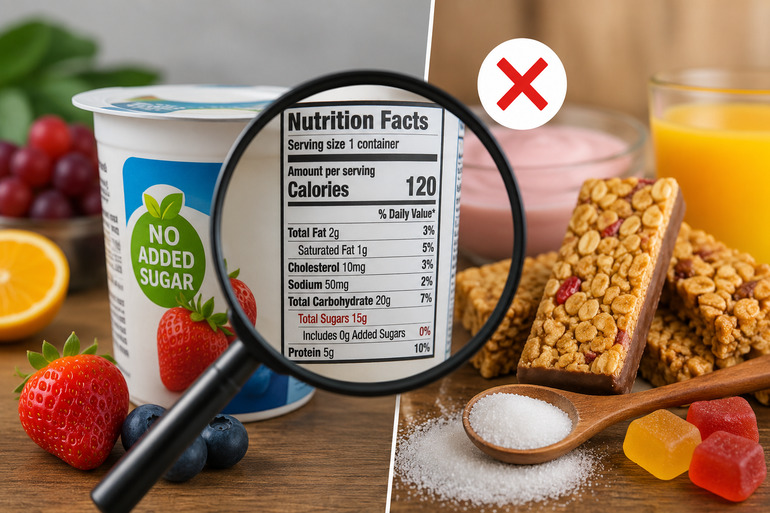
Many shoppers see the phrase “no added sugar” on food packaging and instantly assume the product is healthy. It sounds clean, natural, and better for you.
But the reality is more complicated.
A “no added sugar” label does not automatically mean a product is low in sugar, low in calories, or minimally processed. It only means that manufacturers did not add traditional sugars during production. The food may still contain large amounts of natural sugar, concentrated fruit ingredients, or sweeteners that affect the body in similar ways.
This is where many consumers get confused. A product can carry a healthy-looking label while still being high in sugar or heavily processed.
What does “No added sugar” actually mean?
The term “no added sugar” has a specific meaning under food labeling regulations. According to the U.S. Food and Drug Administration (FDA), it means that no sugars or sweetening ingredients were added to the product during processing or packaging.
This includes ingredients such as:
- White sugar
- Brown sugar
- Honey
- Corn syrup
- Maple syrup
- Molasses
- Fruit juice concentrates are used as sweeteners
However, the product may still naturally contain sugar.
For example, plain fruit juice can still contain a high amount of naturally occurring fructose even if no additional sweeteners were added during production. Similarly, flavored yogurt made with fruit puree may still contain significant sugar content despite carrying a “no added sugar” label.
That is where much of the confusion begins.
Why consumers often misunderstand the label
Most people associate the word “sugar” with table sugar or candy. When they see “no added sugar,” they naturally assume the product is low in sugar overall.
But the label does not mean:
- Sugar-free
- Low-carb
- Low-calorie
- Diabetic-friendly
- Minimally processed
This misunderstanding is strengthened by packaging psychology. Food companies often combine “no added sugar” with words like:
- Natural
- Clean
- Light
- Healthy
- Organic
- Wellness-focused
Together, these phrases create what nutrition experts often call a “health halo effect.”
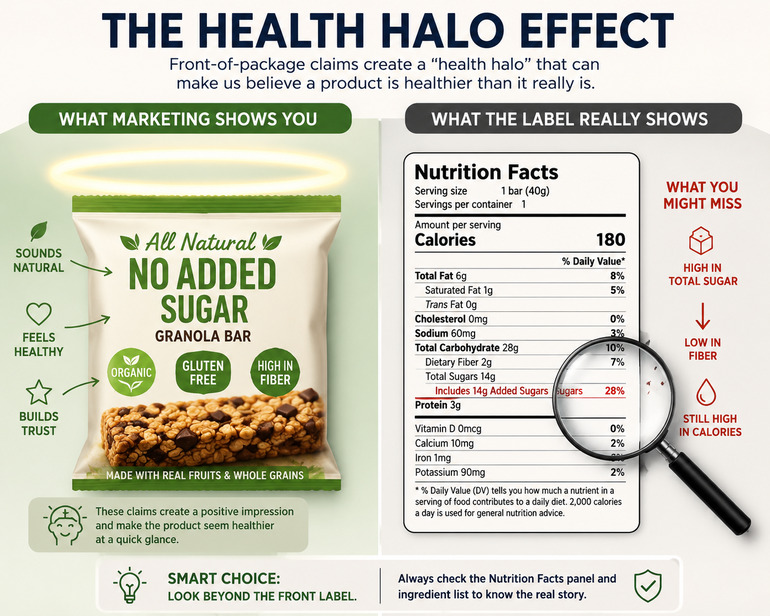
Consumers may trust the product immediately without checking:
- Total sugar
- Serving size
- Ingredient quality
- Artificial sweeteners
- Processing level
Does no added sugar mean sugar-free?
No. Foods labeled “no added sugar” can still contain naturally occurring sugars.
A product labeled “sugar-free,” on the other hand, must contain only very small amounts of sugar per serving according to labeling regulations.
That distinction matters because some no-added-sugar products may still contain enough sugar to significantly affect blood glucose levels.
No added sugar vs sugar-free vs unsweetened
Food labels often sound similar even though they describe very different things.
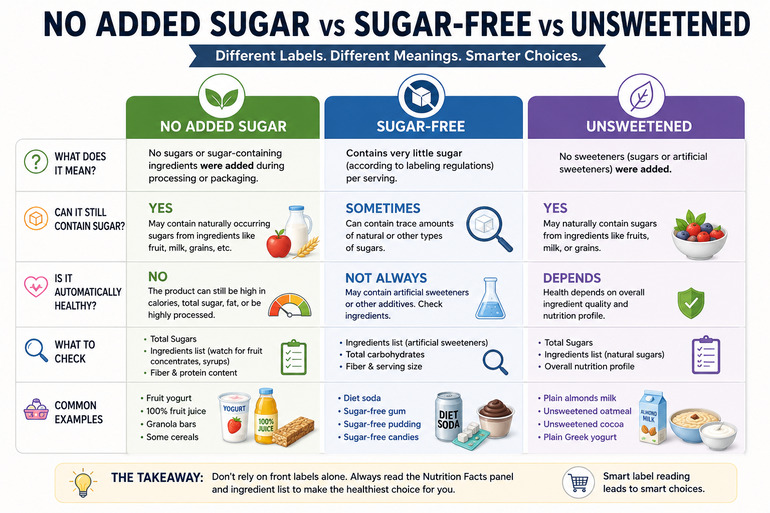
What makes these labels different
| Label | What it means | Can it still contain sugar? | Common examples |
| No added sugar | No sugar added during production | Yes | Fruit yogurt |
| Sugar-free | Very little sugar per serving | Sometimes | Diet beverages |
| Unsweetened | No sweeteners added | Yes | Plain almond milk |
Which option is actually healthier?
There is no single label that guarantees a healthier product.
A no-added-sugar cereal could still contain refined starches and low fiber. A sugar-free snack might contain highly processed artificial sweeteners. Even unsweetened products can vary greatly in nutritional quality.
The healthier option usually depends on:
- Overall ingredient quality
- Fiber content
- Protein content
- Degree of processing
- Portion size
- Your personal health goals
In many cases, minimally processed foods with shorter ingredient lists are easier to evaluate than heavily marketed “healthy” packaged foods.
Why “No added sugar” does not always mean healthy
The biggest misconception around this label is the belief that removing added sugar automatically makes a product nutritious. Health is influenced by far more than one ingredient.
Natural sugars can still be very high
Some foods contain naturally occurring sugar levels that are surprisingly high.
Examples include:
- Fruit juice
- Smoothies
- Dried fruit
- Sweetened fruit puree snacks
- Flavored yogurt
- Coconut water beverages
A single bottle of juice labeled “no added sugar” may still contain sugar levels comparable to soft drinks. The difference is that the sugar came from fruit rather than being added as table sugar.
Although fruit contains beneficial nutrients, removing fiber through juicing can cause sugar to be absorbed much faster in the body. Whole fruit and fruit juice affect the body differently because fiber slows digestion and improves fullness.
Some products replace sugar with other ingredients
When brands remove added sugar, they often replace it with other ingredients to maintain sweetness, texture, or flavor.
| Ingredient | Why brands use it | What consumers should know |
| Fruit juice concentrate | Adds sweetness naturally | Still concentrated sugar |
| Maltodextrin | Improves texture and taste | High glycemic impact |
| Erythritol | Sugar alternative | May cause digestive discomfort |
| Sucralose | Zero-calorie sweetener | Highly processed ingredient |
Some sugar substitutes are lower in calories, but that does not automatically make them healthier for everyone.
Research on artificial sweeteners remains mixed. Some studies suggest certain sweeteners may help reduce calorie intake temporarily, while others raise questions about appetite regulation, cravings, and long-term dietary habits.
Moderation remains important.
The “health halo” effect in marketing
Food marketing plays a major role in how consumers perceive health.
Studies published in the International Journal of Research in Marketing have shown that people often underestimate calories and sugar when products are marketed with wellness-focused claims.
This psychological effect becomes stronger when labels include phrases like:
- No added sugar
- Natural
- Gluten-free
- Organic
- High protein
- Plant-based
While these labels may describe certain product characteristics, they do not automatically reflect overall nutrition quality.
- A protein bar can still be highly processed.
- A granola snack can still contain concentrated sugars.
- An organic product can still be calorie-dense.
That is why understanding the full nutrition label matters more than trusting the front packaging alone.
Hidden sugars that labels may not clearly reveal
Even when food companies avoid adding traditional sugar, products may still contain hidden sugar that functions very similarly in the body.
Ingredients that act like sugar
Consumers often recognize “sugar” on labels but overlook other sweetening ingredients. Common examples include:
- Cane juice
- Rice syrup
- Agave nectar
- Dextrose
- Fructose
- Malt syrup
- Molasses
- Fruit puree concentrate
These ingredients may sound more natural or less processed, but many still contribute significant sugar content.
Why ingredient order matters
Ingredients are listed by weight. That means the first few ingredients usually make up the majority of the product.
If multiple sweeteners appear throughout the ingredient list, manufacturers may technically spread them apart while still delivering a high total sugar load. For example, a cereal could contain:
- Honey
- Brown rice syrup
- Fruit concentrate
- Cane sugar
Each ingredient individually may appear lower on the list, but together they significantly increase sweetness.
How does a product taste sweet if it says no added sugar?
Many no-added sugar foods still taste sweet because they use:
- Naturally concentrated fruit ingredients
- Sugar alcohols
- Artificial sweeteners
- Sweet-tasting starches
Taste alone is not always a reliable indicator of nutritional quality.
How to spot misleading food labels faster
| Red flag | What it may indicate |
| Multiple sweeteners listed | Highly processed product |
| Fruit concentrate near the top | Hidden sugar load |
| Very low fiber | Faster sugar absorption |
| Long ingredient list | Heavy processing |
Are “No added sugar” foods better for weight loss or diabetes?
The answer depends on the food itself. Some products genuinely help reduce overall added sugar intake, while others simply replace sugar with ingredients that create similar metabolic effects.
What research says about blood sugar response
Recent research from organizations such as the FDA, CDC, and EFSA continues to show that excessive sugar intake is associated with increased risks of:
- Obesity
- Type 2 diabetes
- Cardiovascular disease
- Fatty liver disease
- Metabolic dysfunction
When these products may actually help
No-added-sugar products can still be useful in certain situations.
Examples include:
- Replacing sugary soda with lower-sugar alternatives
- Reducing dependence on heavily sweetened foods
- Helping people gradually lower their sugar intake
- Supporting awareness around food choices
The key is choosing products thoughtfully rather than assuming every label equals health.
Who should read labels more carefully?
Certain groups may benefit from paying closer attention to nutrition labels:
- People with diabetes
- Individuals with insulin resistance
- Parents buying snacks for children
- Weight-management consumers
- People monitoring their heart health
For these groups especially, understanding total sugar and ingredient quality becomes more important than relying on marketing claims.
How to read nutrition labels the smart way
Understanding labels becomes much easier once you know what to prioritize.
Check total sugar and added sugar separately
The Nutrition Facts panel now separates:
- Total sugars
- Added sugars
Total sugars include both naturally occurring and added sugars. Added sugars reflect sweeteners introduced during manufacturing. A product may contain zero added sugar while still having high total sugar.
Focus on fiber, protein, and ingredients
Nutrition quality involves more than sugar alone. Products higher in:
- Fiber
- Protein
- Whole-food ingredients
They are often more filling and better balanced. Fiber is especially important because it slows digestion and helps stabilize blood sugar response.
A simple 5-second label-reading method
Before buying a packaged product:
- Check total sugar
- Check added sugar
- Scan the first three ingredients
- Look for fiber content
- Ignore front-label hype initially
This simple habit can help consumers make better decisions quickly without getting overwhelmed.
What to buy instead of blindly trusting labels
The healthiest choices are often the least heavily marketed.
Better snack choices
Simple foods are usually easier to evaluate nutritionally.
Examples include:
- Whole fruit
- Plain Greek yogurt
- Nuts and seeds
- Hard-boiled eggs
- Oatmeal
- Vegetables with hummus
These foods naturally contain nutrients without relying heavily on marketing claims.
Smarter packaged food habits
When buying packaged foods:
- Compare similar products side by side
- Prioritize shorter ingredient lists
- Choose higher-fiber options
- Watch portion sizes
- Focus on overall nutrition quality
No label alone can replace understanding the full ingredient profile.
The upshot
The “no added sugar” label is actually a misinterpretation. Only indicates that no traditional sugars were added during processing, it does not mean the product is low in sugars, minimally processed, or that it is automatically healthy.
Certain foods without added sugar provide the opportunity for healthier food choices, particularly if they replace foods that are very sweet. But some may also include natural sugars, concentrated fruit ingredients, artificial sweeteners, or refined starches, which impact overall nutrition.
The main thing is to pay attention to the back label. The actual amount of sugar, fiber, ingredients, and processing offers a better gauge than marketing claims. The healthiest foods are the ones that don’t have a strong health claim.
FAQs
Is no added sugar good for diabetics?
Not always. Some foods contain no added sugar, but are still high in carbohydrates or natural sugars, which can impact blood glucose levels.
Can no-added-sugar foods still spike blood sugar?
Yes. Fruit juices, refined starches, and concentrated fruit ingredients can also cause blood sugar spikes.
Is fruit sugar healthier than regular sugar?
Whole fruit is healthier overall since it provides fiber, vitamins, and water. But high sugar content in concentrated fruit can lead to over-consumption of sugar.
Are artificial sweeteners safer than sugar?
Research is ongoing. Some people can implement them to cut back on sugar consumption, whilst others opt for cutting back on all highly processed sweeteners.
What is the healthiest label to look for?
There is no perfect front-label phrase. Reading the ingredient list, looking for fiber and total sugar, and focusing on foods that are less processed are the best methods.
Disclaimer: This content is for informational purposes only and is not a substitute for professional medical or dietary advice.