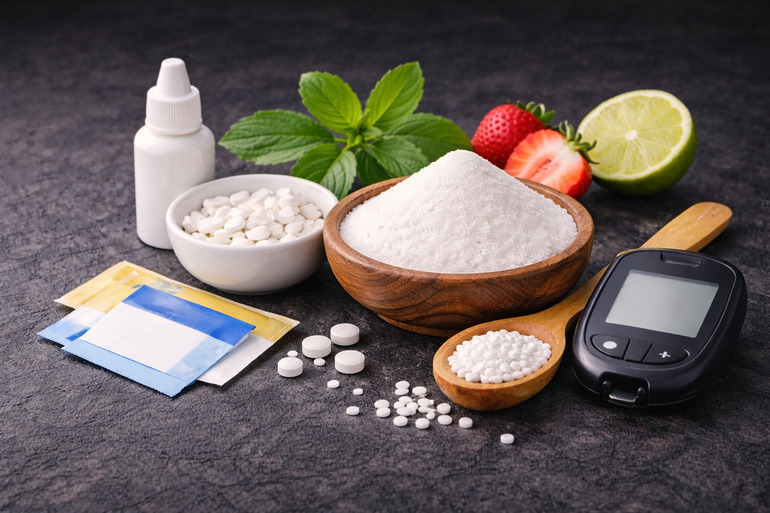
You’re standing in the grocery aisle, holding a “sugar-free” drink or snack, and a question pops up: Are artificial sweeteners really safe for my health? Headlines online seem to contradict each other, and it’s easy to feel unsure about what to believe.
Decades of scientific research and regulatory reviews by authorities like the FDA and EFSA show that approved artificial sweeteners are safe when consumed within recommended limits. But safety isn’t the only question; many people want to know about potential side effects, weight impact, and whether these sweeteners actually help manage blood sugar.
In this article, we cut through the confusion using evidence-based insights. You’ll get to know artificial sweeteners, the risks and benefits, and practical guidance for including them safely in your diet, all without hype or fear.
What are artificial sweeteners?
Artificial sweeteners are chemical compounds used in foods and drinks to provide sweetness with few or no calories. They are much sweeter than table sugar, so only tiny amounts are needed.
Common examples include aspartame, sucralose, saccharin, acesulfame K, and stevia (a plant‑derived option considered a non‑nutritive sweetener). These sweeteners are not sugar. They don’t behave the same way in your body, and that’s part of why scientists study them closely.
How is the safety of artificial sweeteners determined?
Before any artificial sweetener makes its way into your glass or onto your plate, it goes through extensive safety testing. It’s about decades of scientific research, reviewed and challenged from multiple angles.
In the United States, the Food and Drug Administration (FDA) evaluates sweeteners using both animal and human studies. From that data, they establish what’s known as the Acceptable Daily Intake (ADI), a level considered safe to consume every day over a lifetime, with a wide margin of safety built in.
Across the Atlantic, the European Food Safety Authority (EFSA) independently reviews the same body of evidence for European consumers. Their assessments are continuously updated as new research emerges, helping ensure that safety standards evolve alongside the science.
Artificial sweeteners safety: what science really says
So, what does the evidence show when you strip away marketing and fear‑based headlines? Consensus from scientific reviews suggests:
- Most artificial sweeteners do not raise blood sugar as sugar does.
- There is no strong evidence that approved sweeteners cause cancer in humans when consumed within recommended limits.
- They are significantly lower in calories than sugar, which may support energy reduction if used wisely.
One of the most studied sweeteners, aspartame, has been reviewed by health agencies around the world. In fact, the FDA’s detailed assessment of aspartame shows there is no credible evidence that it causes serious harm at typical consumption levels.
This doesn’t mean every single claim online is valid, it means the highest regulatory authorities, using the most comprehensive research available, support their safety.
Common concerns and side effects
Even though science supports the safety of approved sweeteners, some people may experience:
1. Digestive effects
Some sugar substitutes, especially sugar alcohols like xylitol and sorbitol, can cause gas, bloating, or diarrhea. This isn’t dangerous for most people, but it can be uncomfortable.
2. Phenylketonuria (PKU)
People with the rare genetic condition PKU must avoid aspartame because their bodies cannot process phenylalanine, one of aspartame’s breakdown products.
3. Individual responses vary
A small number of people report headaches, mood changes, or cravings. These effects are real for individuals but not consistently found in clinical studies.
Remember: Individual reactions do not necessarily reflect general safety outcomes. Always pay attention to your own body.
Benefits and risks: balanced view
| Sweetener Type | Calories | Blood Sugar Effect | Tooth Health | Typical Use |
| Table Sugar (Sucrose) | High | Raises | Contributes to decay | Everyday foods |
| Artificial Sweeteners | Very low/none | Minimal impact | Does not feed bacteria | Beverages, diet foods |
| Sugar Alcohols | Low | Slight/slow impact | Better for teeth | Chewing gum, sugar‑free candy |
Key benefit: Artificial sweeteners can help reduce total calories and control blood sugar when replacing sugar.
Primary risk: Over‑reliance on sweet tastes might make it harder to enjoy naturally sweet whole foods like fruit.
Do artificial sweeteners cause weight gain?
There’s no simple “yes” or “no.” Here’s what research indicates:
- Using sweeteners instead of sugar can lower calorie intake.
- However, if you use them and still eat high-calorie foods, you may not lose weight.
- Some studies show that people unconsciously compensate for “saved” calories later.
Sweeteners aren’t a magic weight‑loss tool. They are a tool, and how you use them matters.
Artificial sweeteners and diabetes
Since artificial sweeteners do not directly raise blood glucose, they can be helpful for people managing diabetes. Many diabetes care guidelines include sweeteners as safe options when used in moderation.
However, overall diet quality (fiber intake, whole foods, fat quality, timing of meals) remains far more important for blood sugar control than any single ingredient.
The upshot
Artificial sweeteners’ safety is backed by decades of rigorous research and real regulatory review. Agencies like the FDA and EFSA consider approved sweeteners safe within recommended limits. They can offer benefits such as lower calories and minimal impact on blood sugar, especially useful for people managing weight or diabetes.
At the same time, no food ingredient is perfect for everyone. Individual sensitivity, overall diet patterns, and lifestyle choices all matter.
Practical takeaway: If you choose artificial sweeteners, use them as part of a balanced diet. Don’t rely on them as a shortcut to health, but don’t fear them either when used responsibly.
Disclaimer:
This article is for informational purposes only and is not medical advice. Consult a qualified healthcare professional before making dietary changes, especially if you have any medical conditions.