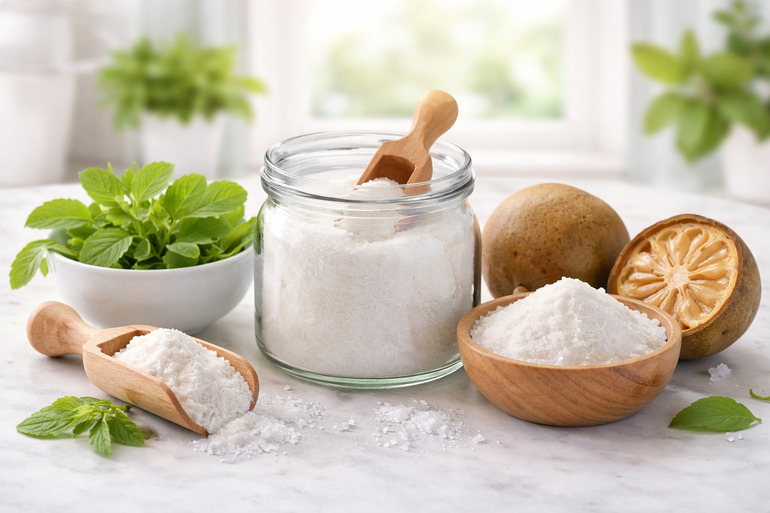
Cutting sugar is one of the most common goals for people trying to improve their diet, manage weight, or support blood sugar control. But replacing sugar isn’t always simple, especially when options like stevia, erythritol, and monk fruit all claim to be “healthier.”
If you’ve ever wondered stevia vs erythritol vs monk fruit and which one actually fits your needs, you’re not alone. Each sweetener behaves differently in taste, digestion, and use.
Here, we will break down how they compare in real-world use, including taste, benefits, side effects, and which one may be best depending on your goals.
What are stevia, erythritol, and monk fruit?
Before comparing these sweeteners, it’s important to understand what they actually are and where they come from. Each one has a different source and composition, which directly affects how it tastes, behaves in recipes, and impacts your body.
- Stevia: Stevia is a plant-based high-intensity sweetener derived from the leaves of the stevia plant. Its sweetness comes from natural compounds called steviol glycosides, which are many times sweeter than sugar but contain no calories and do not raise blood sugar levels.
- Erythritol: Erythritol is a sugar alcohol (polyol) that occurs naturally in small amounts in some fruits. It is typically produced through fermentation and has about 60–70% of the sweetness of sugar, with zero calories and minimal impact on blood glucose.
- Monk Fruit: Monk fruit sweetener is extracted from a small fruit native to Southeast Asia. Its sweetness comes from natural antioxidants called mogrosides, which deliver intense sweetness without calories or a significant effect on blood sugar.
Stevia vs erythritol vs monk fruit: key differences
When comparing stevia vs erythritol vs monk fruit, the differences go beyond sweetness. They vary in taste, digestion, and how they behave in recipes.
1. Taste profile
- Stevia: Can have a slightly bitter or licorice-like aftertaste for some users
- Erythritol: Tastes closest to sugar but may have a cooling sensation in the mouth
- Monk fruit: Clean, sweet taste with minimal aftertaste (often preferred by many users)
In terms of the erythritol vs stevia taste difference, erythritol is generally smoother, while stevia may require adjustment.
2. Calories and blood sugar impact
- Stevia: Zero calories, does not raise blood sugar
- Erythritol: Almost zero calories, minimal impact on blood glucose
- Monk fruit: Zero calories and does not affect blood sugar levels
For people managing diabetes or insulin sensitivity, all three are commonly used because they have little to no glycemic impact.
3. Which sweetener is healthiest?
- Stevia: Natural, plant-derived, widely studied
- Erythritol: Generally well-tolerated but may cause digestive issues in large amounts
- Monk fruit: Also natural and considered gentle on digestion
Research suggests all three are safe when consumed in moderate amounts, but individual responses may vary.
4. Digestive tolerance and side effects
- Stevia: Usually well tolerated, but some people may experience mild nausea or aftertaste sensitivity
- Erythritol: Can cause bloating, gas, or digestive discomfort if consumed in large quantities
- Monk fruit: Rarely causes digestive issues and is generally considered gentle
Among these, erythritol is the one most likely to cause digestive reactions in sensitive individuals.
5. Best zero-calorie sweetener comparison
- Stevia: Best for those who prefer a plant-based, widely available option
- Erythritol: Best for baking due to its sugar-like structure
- Monk fruit: Best for taste and minimal aftertaste
Stevia vs erythritol vs monk fruit – comparison table
| Feature | Stevia | Erythritol | Monk Fruit |
| Source | Stevia leaf (plant extract) | Sugar alcohol (from fermented glucose) | Monk fruit extract (luo han guo) |
| Sweetness | 200–300× sweeter than sugar | 60–70% as sweet as sugar | 150–200× sweeter than sugar |
| Calories | 0 | ~0 (very low, ~0.2 kcal/g) | 0 |
| Taste | Can have a slight bitter/licorice aftertaste | Very close to sugar, slight cooling effect | Clean, but depends on blend |
| Best Use | Drinks, low-cal recipes, and tabletop sweetener | Baking, bulk sugar replacement | Drinks, desserts, baking (especially blends) |
| Digestive Effects | Generally well tolerated | May cause bloating in large amounts | Usually gentle (unless blended with erythritol) |
Monk fruit vs stevia vs erythritol for specific needs
Different goals call for different sweetener choices, and the “best” option can change depending on whether you’re managing a health condition or focusing on calorie control.
Below is how these sweeteners compare for common needs like diabetes management and weight loss.
For diabetics
When comparing monk fruit vs stevia for diabetics, all three are generally considered suitable because they do not significantly raise blood sugar levels. Monk fruit is generally considered safe and does not raise blood sugar, making it popular for diabetics.
The FDA lists monk fruit extracts as GRAS (Generally Recognized As Safe), while EFSA highlights that more data are needed to fully assess safety.
For weight loss
If your goal is weight management, the best sugar substitutes for weight loss can be stevia, monk fruit, or erythritol, depending on usage:
- Stevia and monk fruit: Great for beverages and light use
- Erythritol: Useful in baking and bulk recipes because it mimics sugar volume
None of these directly causes weight loss, but they can help reduce overall calorie intake when replacing sugar.
Which one should you choose?
There is no single “best” sweetener for everyone. The right choice depends on your priorities:
- Choose stevia if you want a plant-based option with wide availability
- Choose erythritol if you need a sugar-like texture for baking
- Choose monk fruit if you prioritize clean taste with minimal aftertaste
For many people, monk fruit blends (often combined with erythritol) provide the most balanced experience in both taste and usability.
The upshot
Choosing between stevia, erythritol, and monk fruit comes down to taste preference, digestion, and how you plan to use the sweetener.
- All three are popular low- or zero-calorie alternatives to sugar
- Monk fruit often stands out for its clean taste
- Stevia is widely available and plant-based
- Erythritol works best in baking, but may cause digestive issues for some
If you’re deciding between stevia, erythritol, and monk fruit, the best approach is to consider your personal tolerance and intended use. Many people even combine them to get the best balance of taste and performance.
In the end, the “best” sweetener is the one that fits your lifestyle, tastes good to you, and helps you consistently reduce sugar intake without discomfort.