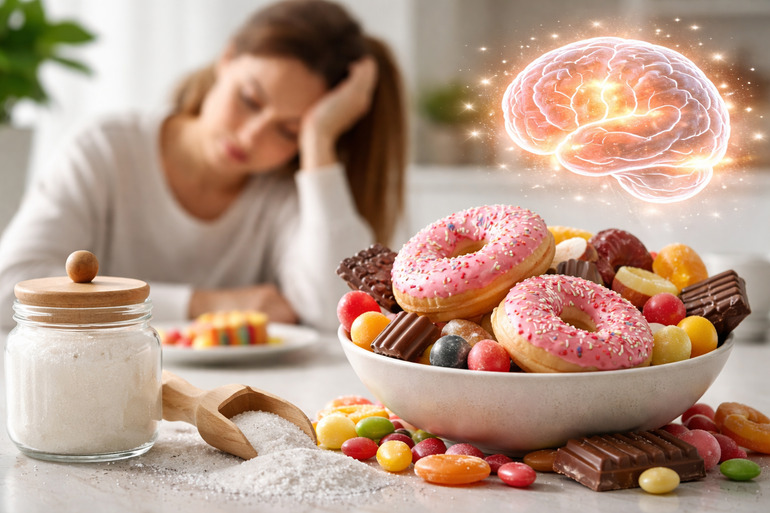
Sugar addiction symptoms are more common than most people realize. You promise yourself “just one bite,” but it never stops there. You crave something sweet when you’re stressed, and without it, your mood and energy feel off. If this sounds familiar, you’re not alone.
In this article, we’ll break down what science says about sugar addiction, the real signs to watch for, what causes constant cravings, and how to stop sugar addiction practically and sustainably.
What is sugar addiction, and is it real?
The idea of sugar addiction is still debated, but research suggests that sugar can strongly influence the brain’s reward system.
When you eat sugar:
- Dopamine (a pleasure chemical) is released
- You feel a quick boost in mood and energy
- Your brain starts linking sugar with comfort and reward
This is why many people ask: Is sugar addictive like drugs?
While sugar is not officially classified as addictive like drugs, repeated overconsumption, especially from processed foods, can create habit-like patterns that feel very similar.
According to the FDA, high intake of added sugars is linked to health concerns, which is why experts recommend limiting daily intake.
Sugar addiction symptoms you shouldn’t ignore
Common symptoms include:
- Strong cravings for sweets, even when you’re not hungry
- Eating sugary foods daily or multiple times a day
- Feeling out of control around desserts or snacks
- Needing more sugar over time to feel satisfied
- Mood swings, irritability, or low energy without sugar
These symptoms often build slowly, so many people don’t realize what’s happening until it becomes a daily habit.
Signs of sugar addiction in daily life
Beyond physical symptoms, your everyday behavior can reveal a lot. Look for these signs of sugar addiction:
- You reward yourself with sweets regularly
- You feel guilty after eating sugar, but repeat the cycle
- You snack on sugary foods when bored or stressed
- You find it hard to refuse desserts even when full
These patterns are not about “lack of willpower.” In most cases, they are linked to how your brain responds to sugar over time.
Sugar cravings cause: why you keep wanting sugar
Sugar cravings don’t just happen for no reason. Most of the time, there are clear causes behind them. When you understand what is triggering your cravings, it becomes much easier to manage them without depending only on willpower.
1. Blood sugar spikes and crashes
When you eat sugary foods, your blood sugar rises quickly and then drops just as fast. This sudden drop makes you feel tired and triggers another sugar craving to boost your energy again. Over time, this creates a cycle of constant highs and lows.
2. Emotional eating
Sugar is often used as a quick emotional fix. It temporarily improves mood by increasing dopamine levels, which is why people crave sweets during stress, sadness, or boredom. However, this effect doesn’t last long, and the craving usually comes back stronger.
3. Habit and routine
If you eat sugar at the same time every day, like dessert after dinner, your brain starts expecting it. Even if your body doesn’t need it, the habit itself triggers cravings. This is why routines play a big role in sugar addiction.
4. Poor sleep
Lack of sleep affects hunger hormones and increases cravings for quick energy foods. When you’re tired, your body looks for sugar because it’s the fastest way to feel alert. Research from the CDC shows that lifestyle patterns like sleep and diet strongly influence sugar consumption.
Effects of sugar on brain function
Over time, frequent sugar intake may reduce the brain’s sensitivity to dopamine. This means you need more sugar to feel the same level of satisfaction. Research reviews from EFSA also suggest that long-term high sugar intake may influence eating behavior and overall dietary patterns.
In many people, this can weaken natural hunger signals, making it harder to recognize when you are truly full. It may also increase preference for highly sweet and processed foods over healthier options.
As a result, breaking the habit becomes more difficult because your brain starts prioritizing quick pleasure over balanced nutrition.
Sugar withdrawal symptoms: what happens when you cut back
If you suddenly reduce sugar, your body may react with sugar withdrawal symptoms. These symptoms may include:
- Headaches
- Fatigue or low energy
- Irritability or mood swings
- Strong cravings
- Difficulty concentrating
These symptoms are temporary and usually last a few days to a week. They are a sign that your body is adjusting to lower sugar intake.
How to reduce sugar cravings naturally?
The good news is that cravings can be reduced with simple, natural strategies. Here’s how to reduce sugar cravings naturally:
- Eat balanced meals with protein, fiber, and healthy fats
- Drink enough water throughout the day
- Get 7–8 hours of sleep
- Choose whole foods instead of processed snacks
- Replace sweets with fruits when needed
These small habits help stabilize your energy and reduce sudden cravings.
How to stop sugar addiction without extreme dieting?
If you’ve ever tried to quit sugar completely overnight, you probably know how hard it is to stick with. In most cases, strict rules lead to stronger cravings and frustration.
A more realistic approach is to make small, steady changes that your body and mind can adjust to over time. This not only reduces sugar withdrawal symptoms but also helps you build habits that actually last.
- Start small
Cut down sugar step by step instead of removing it completely.
- Read food labels
Many packaged foods contain hidden sugars, even in products labeled as “healthy.” Learning to read nutritional labels can help you spot added sugars and make better choices.
- Change your environment
Keep fewer sugary snacks at home so you’re not tempted. Choosing the right sugar alternatives, such as sugar alcohols used in sugar-free products, can make the transition easier.
- Manage stress
Find alternatives like walking, journaling, or deep breathing instead of reaching for sugar.
Practical tips to quit sugar for good
If you want lasting results, focus on consistency. Here are simple tips to quit sugar for good:
- Plan your meals ahead of time
- Avoid skipping meals
- Keep healthy snacks available
- Track your progress
- Be patient with yourself
- You can also try making your own sugar-free treats at home to stay in control of ingredients and avoid hidden sugars.
Progress may feel slow, but it becomes easier over time.
The upshot
Sugar addiction symptoms can affect your daily life more than you realize. From cravings to mood changes, the cycle can feel hard to break, but it is possible.
By understanding the causes, recognizing the signs of sugar addiction, and applying simple strategies, you can regain control of your habits.
Start small, stay consistent, and focus on long-term change. Real progress comes from daily effort.