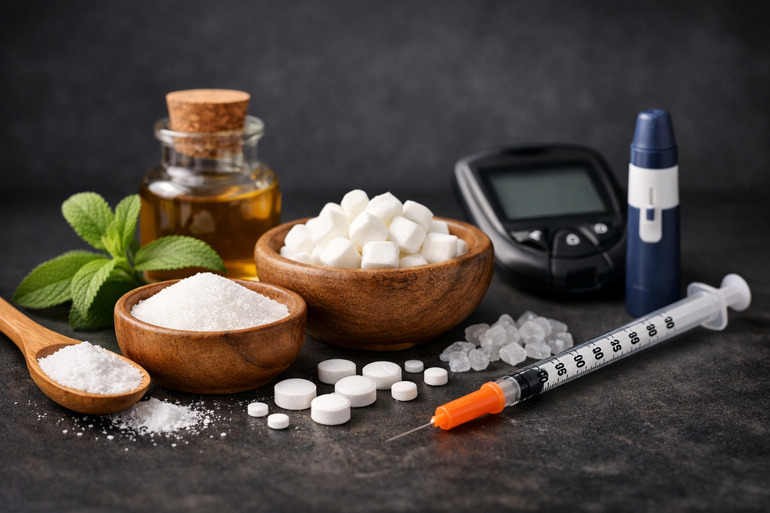
You switch to “sugar-free,” thinking you’ve made the healthier choice. But then a new question pops up: Is this still affecting my insulin?
It’s a valid concern, especially if you’re trying to manage weight, blood sugar, or overall health. The confusing part is that not all sweeteners behave the same way in the body. Some are almost inactive, while others can have a small effect.
Let’s break it down in simple terms, so you know exactly what’s happening and what actually matters.
What is insulin, and why should you care?
Insulin is a hormone that helps your body handle sugar. When you eat something sweet, your blood sugar rises, and insulin steps in to move that sugar into your cells.
This process is normal. The problem starts when insulin spikes happen too often or too intensely.
Over time, frequent spikes can make your body less responsive. That’s why people don’t just avoid sugar, they also question sugar substitutes and insulin response.
Do sugar substitutes spike insulin levels?
Here’s the simple answer: most sugar substitutes do not cause a strong insulin spike, but a few may trigger a small response.
The difference comes down to how your body processes each type. Some sweeteners pass through without being absorbed, while others interact slightly with digestion or hormones.
Research published in the National Library of Medicine explains that non-nutritive sweeteners can affect the body differently depending on how they are metabolized.
In practical terms, this means using sweeteners doesn’t automatically lead to the same insulin reaction as sugar, but it’s not always zero either.
Do artificial sweeteners raise insulin?
Artificial sweeteners are common in diet sodas, protein bars, and “zero sugar” snacks. Many people assume that they trick the body into releasing insulin because they taste sweet.
That’s not usually the case.
Most artificial sweeteners:
- Do not raise blood sugar
- Have little effect on insulin when consumed alone
- Pass through the body with minimal metabolic activity
However, context matters. When consumed alongside carbs, the body’s response can change slightly.
So the sweetener itself isn’t the main issue; it’s how it fits into your overall eating habits.
Do sweeteners affect blood sugar and insulin the same way?
This is where many people get confused.
Blood sugar and insulin are connected, but they don’t always react in the same way. A sweetener can leave blood sugar unchanged while still causing a mild insulin response.
Here’s a simple way to think about it:
- Blood sugar shows what enters your bloodstream
- Insulin shows how your body reacts
Most low-calorie sweeteners don’t increase blood sugar at all. Their effect on insulin, if any, tends to be small and short-lived. Harvard Health explains that artificial sweeteners generally don’t raise blood sugar, though their effect on insulin can vary slightly depending on the situation.
Insulin response to sugar alcohols
Sugar alcohols sit somewhere in between sugar and zero-calorie sweeteners. Your body partially absorbs them, which means they can have a mild effect.
But not all of them behave the same.
- Erythritol has almost no impact
- Xylitol causes a small, gradual response
- Maltitol can raise both blood sugar and insulin more noticeably
Because of this, product labels matter. Two “sugar-free” foods can affect your body very differently depending on which sugar alcohol is used.
4 sweeteners that do not spike insulin
If your goal is to keep insulin stable, some options stand out as more reliable.
These are generally considered low-impact:
- Stevia
- Monk fruit
- Erythritol
- Allulose
They work well because your body doesn’t convert them into glucose. As a result, they don’t require much insulin to manage.
For most people, these are the easiest and safest swaps.
Are sugar substitutes safe for diabetics?
For people with diabetes, sugar substitutes can be useful, but they’re not completely risk-free.
They can help reduce sugar intake and make meals easier to manage. But some types still require attention.
Important things to keep in mind:
- Zero-calorie sweeteners are usually safe in moderation
- Some sugar alcohols can still affect blood sugar
- Individual responses can vary
According to the CDC, zero-calorie sweeteners generally have minimal impact on blood sugar when used in moderation for people with diabetes.
Practical tips to use sweeteners without issues
Instead of focusing only on which sweetener to choose, it’s more helpful to look at how you use them daily.
A few simple habits can make a big difference:
- Stick to low-impact options like stevia or erythritol
- Don’t rely heavily on packaged “sugar-free” foods
- Keep your overall diet balanced
- Gradually reduce your need for sweetness
These steps help you avoid unnecessary insulin fluctuations without overcomplicating things.
The upshot
So, do sugar substitutes spike insulin?
For most people, they don’t cause a significant spike. However, the effect can vary depending on the type of sweetener and how often it’s used. Some options have almost no impact, while others may lead to a small, gradual response.
Artificial sweeteners are generally low in impact, sugar alcohols can vary, and natural choices like stevia tend to be more stable for regular use.
What matters most is your overall eating pattern. If your diet is balanced and not overly reliant on processed “sugar-free” foods, using sweeteners in moderation is unlikely to create issues.
A simple approach works best: use them wisely, don’t overdepend on them, and focus on building habits that support long-term health.