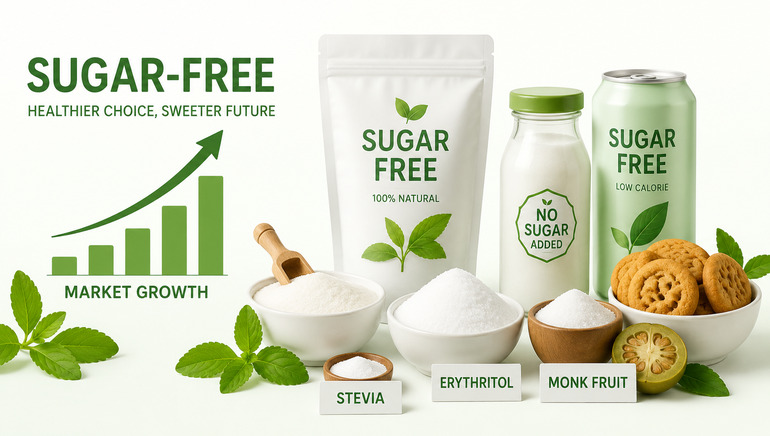
Consumers are increasingly looking for ways to reduce sugar consumption, and food manufacturers are responding with a growing range of sugar-free and reduced-sugar products. Recent market reports suggest this trend is no longer limited to people managing diabetes or weight concerns. Instead, it is becoming a broader consumer movement that is reshaping product development across the food and beverage industry.
Green View Research forecasts indicate that demand for alternative sweeteners such as stevia, erythritol, monk fruit, and allulose is expected to rise steadily over the next decade. As manufacturers invest in new formulations and healthier product options, sugar reduction is emerging as one of the most significant trends influencing the global food market.
Market forecasts pointing to strong growth
The latest projections from Grand View Research estimate that the global sugar substitutes market could grow from approximately $8 billion in 2024 to more than $15 billion by 2033. Analysts attribute this expansion to increasing health awareness, higher rates of obesity and diabetes, and stronger consumer demand for low-calorie food and beverage options.
Mordor Intelligence also highlights continued momentum across both natural and artificial sweetener categories, with beverage manufacturers leading adoption as companies reformulate products to reduce sugar content while maintaining taste.
Food brands shift toward blended sweetener solutions
One of the most notable developments is the growing use of blended sweeteners. Rather than relying on a single ingredient, manufacturers are combining multiple sweeteners to improve flavor, texture, and stability.
This approach is helping companies address one of the industry’s biggest challenges: delivering a sugar-like taste experience without the calories associated with traditional sugar. Innovations involving stevia, monk fruit, and sugar alcohols are becoming increasingly common across beverages, dairy products, snacks, and baked goods.
Health trends continue to drive demand
The market’s growth is closely tied to changing consumer attitudes toward nutrition. Shoppers are paying greater attention to sugar content and are actively seeking products that support wellness goals, including weight management and healthier lifestyles.
Recent industry research suggests that demand is expanding beyond traditional diet-focused consumers. Many shoppers now view sugar reduction as part of a broader effort to improve overall health, creating opportunities for manufacturers to introduce lower-sugar alternatives into mainstream product categories.
What it means for the food industry
The shift toward sugar-free products is encouraging significant investment in ingredient innovation. Suppliers are developing new sweetener technologies that improve taste while helping brands meet consumer expectations for cleaner labels and fewer calories.
At the same time, regulatory pressure, sugar taxes in some markets, and growing public health campaigns aimed at reducing sugar intake are adding momentum to the trend. A report from Reuters highlights that Industry observers increasingly view sugar reduction as a long-term market transformation rather than a temporary consumer preference.
The upshot
With market forecasts projecting sustained growth and manufacturers continuing to expand sugar-free product portfolios, the role of alternative sweeteners is expected to become even more prominent in the years ahead.
For consumers, that likely means greater availability of sugar-free choices across everyday food and beverage categories, while for brands it signals an ongoing race to deliver healthier products without compromising taste.