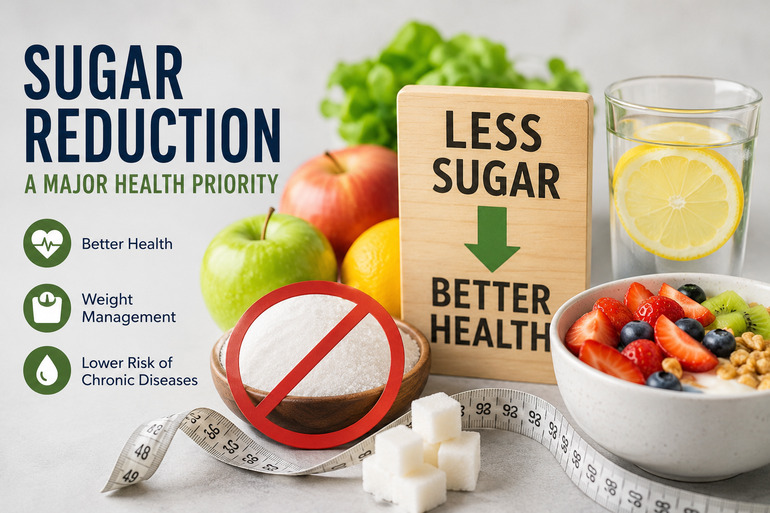
Public health authorities worldwide are increasingly treating sugar reduction as a core preventive health strategy rather than a secondary dietary recommendation. The World Health Organization (WHO) continues to recommend limiting free sugar intake to below 10% of total daily energy intake, with additional health benefits below 5%.
This guidance is reinforced by long-term epidemiological findings showing strong associations between high sugar intake and rising rates of obesity, type 2 diabetes, and cardiovascular disease.
The Organisation for Economic Co-operation and Development (OECD) has also reported that obesity-related conditions are placing growing pressure on healthcare systems, with dietary sugar identified as one of the key modifiable risk factors in high-income and emerging economies, OECD Obesity Update.
Rising disease burden is driving policy action
Governments are responding with a combination of sugar taxes, front-of-pack labeling laws, and reformulation targets. Countries that introduced sugar-sweetened beverage taxes have reported measurable reductions in consumption, particularly among younger consumers.
A review published by the World Health Organization found that fiscal measures such as excise taxes on sugary drinks led to significant declines in purchase volumes and encouraged manufacturers to reformulate products with lower sugar content.
At the same time, public health researchers emphasize that policy alone is insufficient unless combined with consumer education and industry cooperation, particularly in markets where ultra-processed foods dominate daily diets.
The sugar-free and reduced-sugar market expands rapidly
The commercial response to these health pressures has been a rapid expansion of the sugar-free and reduced-sugar product category. According to a global market analysis by The Business Research Company, the non-sugar sweeteners industry is expected to grow steadily over the next decade, driven by rising demand for healthier alternatives across beverages, bakery products, and packaged foods.
Food manufacturers are increasingly reformulating products using stevia, monk fruit extract, sugar alcohols, and blended sweetener systems. Beverage companies, in particular, have accelerated “zero sugar” product lines as consumer preference shifts toward low-calorie and health-conscious options.
However, industry experts note that replacing sugar remains technically complex. Sugar contributes not only sweetness but also texture, browning, and preservation properties, making full substitution difficult without affecting product quality.
Consumer behavior shifts through digital nutrition tools
Another major factor accelerating sugar reduction is the rise of digital nutrition tracking technologies. Mobile apps, wearable integrations, and AI-based diet platforms now allow consumers to track daily sugar intake more accurately than ever before.
This increased visibility has created what analysts describe as a “behavioral feedback loop,” where consumers become more aware of hidden sugars in processed foods, prompting demand for cleaner labels and reformulated products.
Industry outlook: structural change, not short-term trend
The convergence of regulatory pressure, scientific consensus, and consumer awareness suggests that sugar reduction is becoming a structural shift in the global food system rather than a temporary wellness trend.
Future growth in the sector is expected to be driven by hybrid sweetener systems, AI-assisted food formulation, and expanded regulatory alignment across regions. While challenges remain in taste replication and cost efficiency, the direction of travel is increasingly clear: lower sugar content is becoming a baseline expectation across major food categories.
The upshot
Sugar reduction is no longer confined to public health advisories or niche diet conversations; it is now embedded across policy frameworks, food industry strategy, and consumer behavior. As governments tighten regulations and companies accelerate reformulation efforts, the global food landscape is steadily shifting toward lower-sugar formulations.
While technical and sensory challenges remain, the combined force of science, regulation, and market demand suggests that sugar reduction will continue to be a defining priority shaping the future of the food and beverage industry.