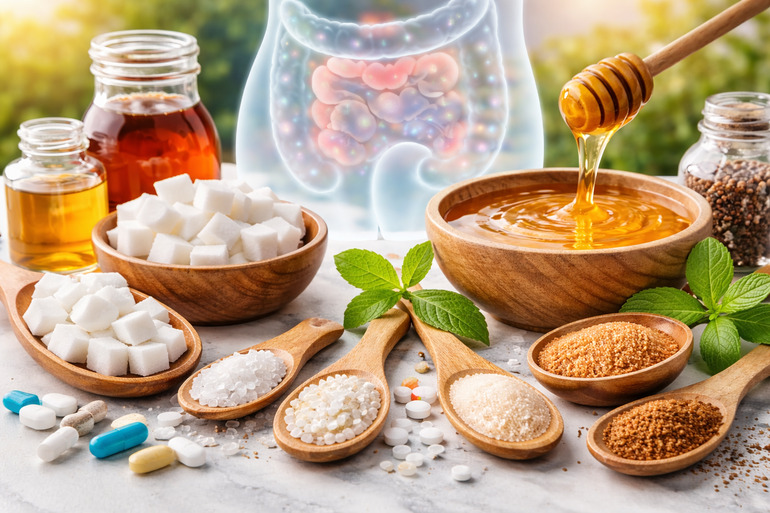
Many people replace sugar with sweeteners, thinking it is a healthier choice for their gut and overall health. But the reality is not that simple. Different sweeteners can affect your digestive system in different ways.
Your gut is home to trillions of bacteria that help with digestion, immunity, and nutrient absorption. When you change what you eat, especially sweeteners, it can influence this delicate balance.
In this article, we will clearly explain how different sweeteners affect gut health, what research suggests, and what you should know before choosing them.
Understanding how sweeteners affect gut health
Sweeteners do more than just add sweetness. Once they enter your body, they can interact with gut bacteria, digestion speed, and even water balance in the intestines.
Some sweeteners are broken down easily, while others pass through the digestive system mostly unchanged. This difference is what creates different effects on gut health.
Research reviewed by health authorities suggests that sweeteners may have different effects on gut microbiota, but results are still considered inconsistent and depend on individual use.
Artificial sweeteners’ gut health effects
Artificial sweeteners like aspartame, sucralose, and saccharin are commonly used in diet drinks, sugar-free snacks, and processed foods.
They contain little or no calories, but their effect on gut health is still being studied.
Possible gut health effects:
- May slightly change gut bacteria composition in some people
- Can reduce or shift bacterial diversity with frequent use in certain cases
- Usually no noticeable effect in many healthy individuals
- Effects depend on diet quality and overall lifestyle
Overall, current evidence does not support broad harm in healthy individuals at typical intake levels, but it also doesn’t justify a blanket “gut-neutral” claim, effects, where present, are subtle and context-dependent.
Natural sweeteners’ gut health effects
Natural sweeteners include honey, maple syrup, coconut sugar, and stevia. These are often considered closer to traditional foods compared to artificial options.
Although natural sweeteners may feel “safer,” they still affect digestion because they contain sugars or plant compounds that interact with gut bacteria.
Possible gut health effects:
- Generally easier to digest in moderate amounts
- May provide small support to gut bacteria (especially honey)
- Can still cause bloating or blood sugar spikes if overused
- Usually better tolerated than sugar alcohols in most people
Even natural sweeteners should be used in balance because excess sugar intake can negatively affect gut health over time.
Sugar alcohols’ gut health effects
Sugar alcohols like sorbitol, xylitol, and erythritol are commonly found in sugar-free gum, candies, and “diet” products.
They are only partially absorbed in the body, which is why they often reach the large intestine, where gut bacteria ferment them.
Possible gut health effects:
- Gas and bloating in many people
- Loose stools or laxative effect in higher amounts
- Discomfort in sensitive digestive systems
- Better tolerance of very small amounts
Sugar alcohols are one of the most common causes of digestive issues among sweeteners.
Sweeteners comparison for gut health
| Sweetener Type | Examples | Gut Health Impact | Digestive Effect |
| Artificial sweeteners | Aspartame, Sucralose, Saccharin | May slightly affect gut bacteria in some individuals | Usually well tolerated, effects vary |
| Natural sweeteners | Honey, Maple syrup, Coconut sugar, Stevia | Generally mild impact when used in moderation | Easier on digestion but still sugar-based |
| Sugar alcohols | Sorbitol, Xylitol, Erythritol | More likely to disturb gut balance | Often causes gas and bloating in sensitive people |
Do sweeteners affect gut bacteria
Yes, some sweeteners can affect gut bacteria, but the impact is usually small and highly individual.
Your gut microbiome reacts differently based on:
- Diet quality
- Sweetener type
- Quantity consumed
- Personal gut sensitivity
Possible changes include:
- Minor shifts in bacterial balance
- Temporary changes in digestion patterns
- No effect in many healthy individuals
Which sweeteners are better for gut health
There is no single “perfect” sweetener, but some options are generally easier on digestion.
Better choices for most people:
- Stevia (plant-based, usually gentle on the gut)
- Small amounts of honey (natural, but still sugar-based)
- Minimal use of maple syrup or coconut sugar
Tips for better gut health:
- Avoid overuse of sugar alcohols
- Do not rely heavily on multiple sweeteners daily
- Pay attention to your body’s reaction
- Keep overall diet balanced and fiber-rich
The upshot
Different sweeteners affect gut health in different ways, and the impact depends more on usage and individual sensitivity than just the type itself.
Artificial sweeteners may slightly affect gut bacteria in some people, natural sweeteners are generally easier to tolerate in moderation, and sugar alcohols are more likely to cause digestive discomfort, including bloating.
The key is not to completely avoid sweeteners, but to use them wisely and in moderation while focusing on an overall balanced diet that supports gut health.