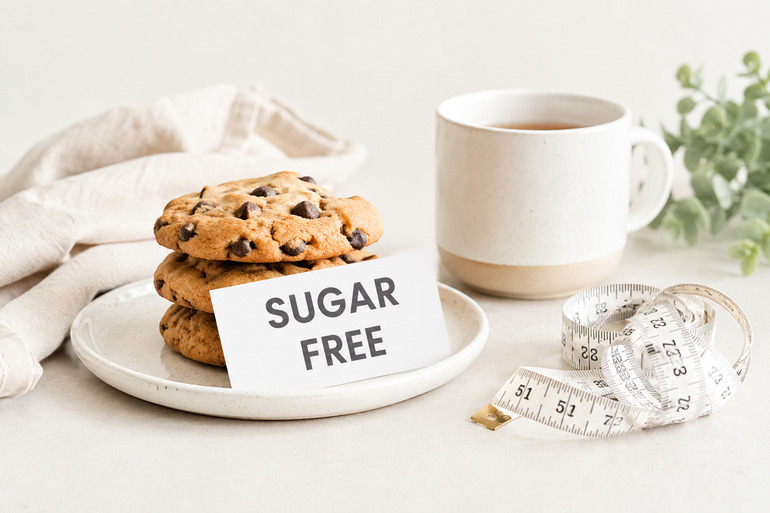
You cut sugar. You read every label. You swapped cookies for “sugar-free” versions and soda for diet drinks. And somehow, the scale barely moved. This is more common than you think. And the reason isn’t willpower.
The fact is, sugar-free doesn’t mean calorie-free. Artificial sweeteners may influence insulin responses, appetite, or food intake in some people, although findings remain mixed.
The sugar-free trap most people fall into
The FDA defines “sugar-free” as less than 0.5g of sugar per serving. That’s it. The label says nothing about total calories, refined carbs, or fat content.
Many sugar-free products replace sugar with maltitol, white flour, or extra fat. They look cleaner, but they aren’t always lighter.
What “sugar-free” actually means on a food label
A sugar-free chocolate bar may carry 200 calories. A “no added sugar” granola can pack more carbs than a bowl of cereal. The label is a legal definition, not a diet guarantee.
Your body can respond to the perception
When your tongue detects sweetness, real or artificial, it sends a signal. In some people, the pancreas may release a small amount of insulin before glucose enters the bloodstream, a phenomenon known as the cephalic phase insulin response.
How artificial sweeteners spike insulin
A 2024 study found that sucralose raised blood insulin levels by 20% compared to plain water. Higher insulin can temporarily promote energy storage and reduce fat breakdown, although overall body weight is influenced by total energy balance. No sugar arrived, but your body is already prepared to store it.
Some people may experience increased hunger or cravings afterward. You reach for carbs. This may contribute to a cycle of increased snacking for some individuals.
The gut microbiome link
Some studies suggest that sweeteners such as sucralose may alter the gut microbiome, although the long-term effects in humans remain under investigation. Changes in the gut microbiome have been associated with reduced glucose tolerance in some studies.
The “halo effect” is making you eat more
When a food feels healthy, people eat more of it. This is the health halo effect, and sugar-free labels can contribute to this effect for some consumers.
One sugar-free cookie feels safe. So you eat three. The calorie savings may be reduced or eliminated if larger portions are eaten.
Sugar-free foods that hide extra calories
- Sugar-free chocolate and candy (high in fat and maltitol)
- Protein bars labeled “no added sugar” (often 250–350 calories each)
- Diet drinks paired with larger portion meals
- “Naturally sweetened” snacks (still calorie-dense)
Compensation eating derails your progress
Cutting sugar may trigger stronger carb cravings later in the day. Harvard Health researchers note that frequent use of intense sweeteners may make whole foods, like fruit and vegetables, taste less satisfying.
Your brain expects calories when it tastes sweetness. When none arrive, hunger hormones rebound. You often eat more at the next meal without realising it.
A 2017 review of 37 studies covering over 400,000 participants found that long-term sweetener use was linked to increased weight and waist circumference over time.
The WHO recommends keeping free sugar intake below 10% of daily calories. It does not suggest replacing sugar with sweeteners as an automatic fix.
The upshot
Sugar-free is a starting point, not a solution.
Your body responds to the taste of sweetness, not just sugar molecules. Artificial sweeteners may influence insulin responses, gut microbiota, and appetite in some people, but findings across studies are mixed. The halo effect causes quiet overeating. Together, these factors may reduce the calorie deficit that some people expect from choosing sugar-free products.
Rather than focusing only on sugar-free products, a balanced diet and overall calorie intake are generally more important for weight management. The goal isn’t a sugar-free product. It’s a body that burns what you eat.