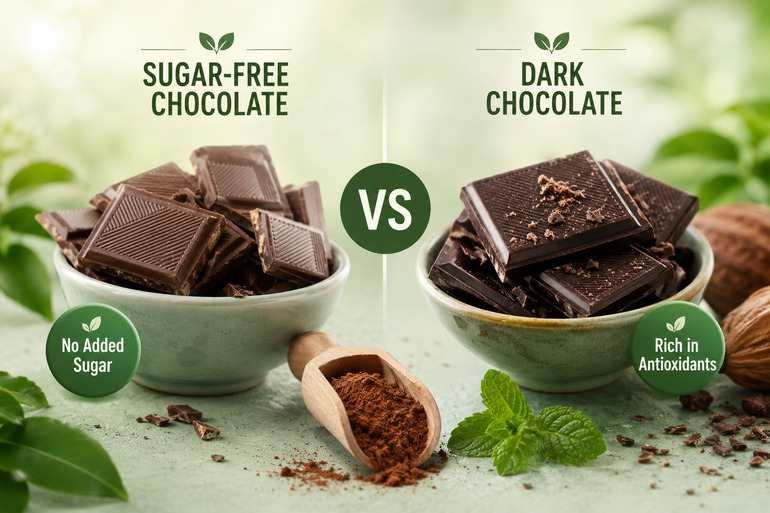
Standing in the chocolate aisle, torn between the “sugar-free” bar and the “70% dark” one? You’re not alone. Both are sold as the guilt-free choice, but they earn that label in completely different ways. Dark chocolate gets its reputation from its high cocoa content and naturally occurring plant compounds.
Sugar-free chocolate focuses on reducing added sugar by using alternatives like sugar alcohols or sweeteners. The healthier choice depends on your goals, whether you want more antioxidants or better blood sugar control.
So which one actually deserves a spot in your house? Here’s what the science and health agencies have to say, so you can pick with confidence instead of guessing.
Quick verdict
- Choose dark chocolate if: You want antioxidants, flavanols, and heart-health benefits.
- Choose sugar-free chocolate if: You have diabetes, follow a low-sugar diet, or want to reduce added sugar.
- Best overall: For most healthy adults, 70–85% dark chocolate is the better everyday option when eaten in moderation.
What makes dark chocolate different
Dark chocolate contains a much higher concentration of cocoa solids than milk chocolate, and it’s this cocoa content that gives it most of its reputation for health benefits.
According to NIH News in Health, small studies suggest that cocoa contains flavanols, plant compounds that may support heart health and brain function, particularly in older adults. However, the agency notes that more research is still needed to confirm these benefits.
Key compounds in cocoa
Research published on the National Center for Biotechnology Information (NCBI) database points to flavonoids as the main antioxidant compounds in dark chocolate, and these are linked to reduced oxidative stress and better blood vessel function.
A separate review on PMC found that regular dark chocolate intake was associated with improvements in cholesterol markers, including higher HDL (“good” cholesterol) and lower triglycerides in some study groups. These effects tend to be more noticeable with chocolate that contains 70% cocoa or higher, since it carries more flavanols and less added sugar per serving.
What “sugar-free” chocolate actually contains
Sugar-free chocolate isn’t sugar-free in the sense of being additive-free. It typically replaces sugar with sugar alcohols (like maltitol, erythritol, or sorbitol) or non-nutritive sweeteners (like stevia or sucralose).
The U.S. Food and Drug Administration (FDA) confirms that sugar alcohols are slightly lower in calories than sugar and don’t cause the same rapid blood glucose spike, which is why they’re common in sugar-free candies and baked goods.
Common substitutes and their effects
MedlinePlus, a service of the U.S. National Library of Medicine, notes that FDA-approved sugar substitutes have been studied extensively and are generally considered safe for most people. Though there still isn’t enough evidence to say they help with long-term weight loss or lower heart disease risk.
Sugar alcohols also come with a well-documented downside: eaten in excess, they can cause bloating, gas, and a laxative effect, since the body absorbs them poorly.
Nutritional snapshot: dark chocolate vs sugar-free chocolate
| Factor | Dark Chocolate (70–85% Cocoa) | Sugar-Free Chocolate |
|---|---|---|
| Main sweetener | Small amount of added sugar | Sugar alcohols or artificial sweeteners |
| Antioxidants (Flavanols) | High | Low to none |
| Calories (per 30g) | Roughly 150–170 | Roughly 130–160 |
| Blood sugar impact | Moderate, although higher cocoa content helps reduce the effect | Low |
| Digestive tolerance | Generally well tolerated | May cause bloating or diarrhoea when consumed in excess |
| Best suited for | Heart and brain health support | People with diabetes or those reducing added sugar intake |
Health effects compared
The Centers for Disease Control and Prevention (CDC) recommends that people aged two and older keep added sugars under 10% of daily calories, which for a 2,000-calorie diet works out to about 50 grams a day. Dark chocolate, especially at higher cocoa percentages, generally fits within this limit far more easily than milk chocolate.
Sugar-free chocolate can help even more directly with this goal since it removes added sugar almost entirely, which the U.S. Department of Agriculture (USDA) also highlights as a key strategy for reducing excess sugar intake, particularly for people managing diabetes or watching their weight.
Digestive comfort and tolerance
While sugar-free chocolate helps with blood sugar, it isn’t free of trade-offs. As MedlinePlus and the FDA both note, sugar alcohols are only partially digested, so eating too much in one sitting can lead to gas, bloating, or loose stools. Dark chocolate doesn’t carry this particular risk, though its saturated fat and calorie content still mean portion control matters.
Which one should you choose?
There isn’t a single universal winner. If your main concern is added sugar or blood glucose control, sugar-free chocolate in moderate amounts can be a practical swap, as long as you’re comfortable with the possible digestive side effects of sugar alcohols.
If you’re after antioxidants, heart-supportive flavanols, and a more nutrient-dense treat, dark chocolate with a high cocoa percentage (70% or above) is the stronger pick, provided it’s eaten in sensible portions since it still contains calories and some added sugar.
What to Look for When Buying Chocolate
Not all chocolate bars are created equal. Use these tips to make a healthier choice:
- Choose dark chocolate with at least 70% cocoa.
- Read the ingredient list carefully.
- Look for cocoa listed as the first ingredient.
- Choose products with minimal added sugar.
- If buying sugar-free chocolate, prefer products sweetened with stevia or erythritol, as some people tolerate these better than maltitol.
- Avoid products with long lists of artificial additives whenever possible.
How Much Chocolate Is Healthy?
Portion size matters just as much as the type of chocolate you choose. For most adults, around 20–30 grams (about one to two small squares) of dark chocolate per day is generally considered a reasonable amount.
Sugar-free chocolate should also be eaten in moderation. Although it contains little or no added sugar, eating large amounts may cause digestive discomfort due to sugar alcohols.
The upshot
There isn’t one perfect choice for everyone.
If you’re looking for the greatest nutritional value, dark chocolate (70–85% cocoa) comes out ahead thanks to its high flavanol and antioxidant content.
If reducing added sugar or managing diabetes is your priority, sugar-free chocolate can be a practical alternative, provided you tolerate sugar substitutes well.
Whichever option you choose, moderation is key. Eating sensible portions while following an overall healthy diet is far more important than choosing one chocolate over another.
FAQs
Not always. Sugar-free chocolate contains less added sugar, while dark chocolate naturally provides higher levels of antioxidants and flavanols that may support heart health.
Yes. In moderation, dark chocolate with at least 70% cocoa can fit into many diabetic meal plans, but portion size and overall carbohydrate intake should still be considered.
Many sugar-free chocolates are suitable for keto diets, but always check the ingredient list, sweeteners used, and the net carbohydrate content before purchasing.
It depends on the brand. Sugar-free chocolate is not always lower in calories because cocoa butter contributes significant fat and energy.
Yes. Sugar alcohols such as maltitol and sorbitol may cause bloating, gas, or diarrhoea when consumed in large amounts, especially in sensitive individuals.