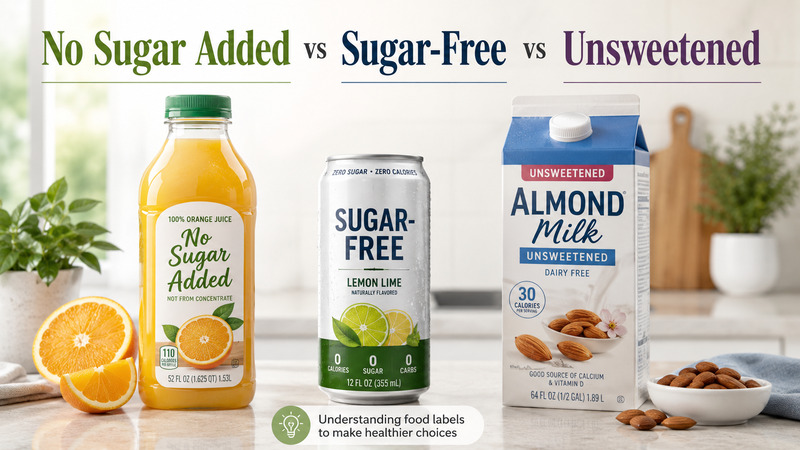
You pick up a bottle of juice. It says “no sugar added.” You grab a protein bar. It says “sugar-free.” Then you see a can of coconut milk labeled “unsweetened.” Are these all the same thing? Not even close.
These three labels look similar, but they mean very different things, and food manufacturers know that most shoppers can’t tell them apart. This guide breaks down exactly what each label means, the rules behind them, and which one actually matters for your health goals.
What “no sugar added” actually means
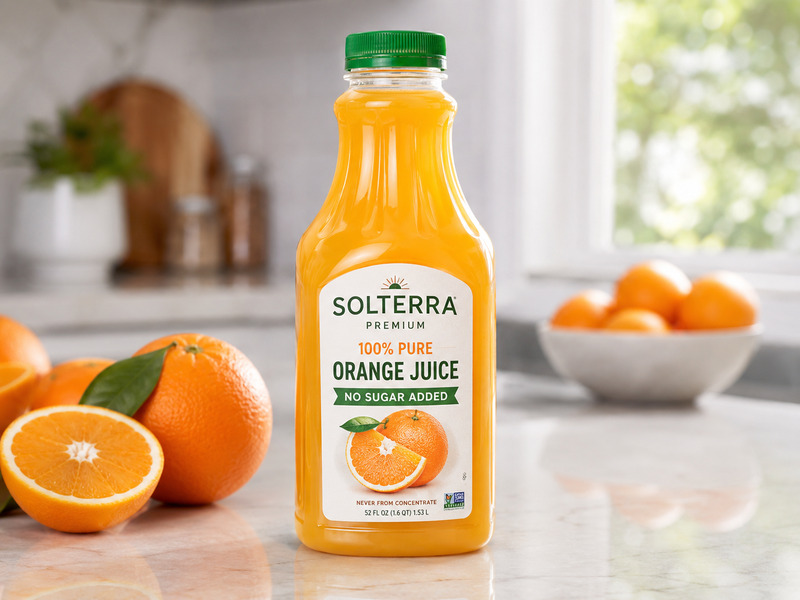
“No sugar added” sounds like a health win. And sometimes it is, but not always.
This label means the manufacturer did not add any sugar during processing or packaging. No table sugar, no honey, no maple syrup, and no other sweeteners were stirred in.
But here is the catch: the product can still be packed with natural sugars.
Think about a carton of 100% orange juice labeled “no sugar added.” Oranges are naturally high in fructose. That juice could have 20–25 grams of sugar per serving, all from the fruit itself. The label is technically true. But the sugar is absolutely there.
According to the FDA’s labeling guidelines, a “no sugar added” claim is only permitted if:
- No sugar or sugar-containing ingredient was added during processing
- The product contains no more sugar than an unsweetened version of that food
- The label clearly notes if the food is not low-calorie
This label is most common on fruit juices, canned fruits, yogurts, and cereals. Always flip the pack and check the Nutrition Facts panel. The grams of sugar listed will tell you what is actually inside.
What “sugar-free” actually means
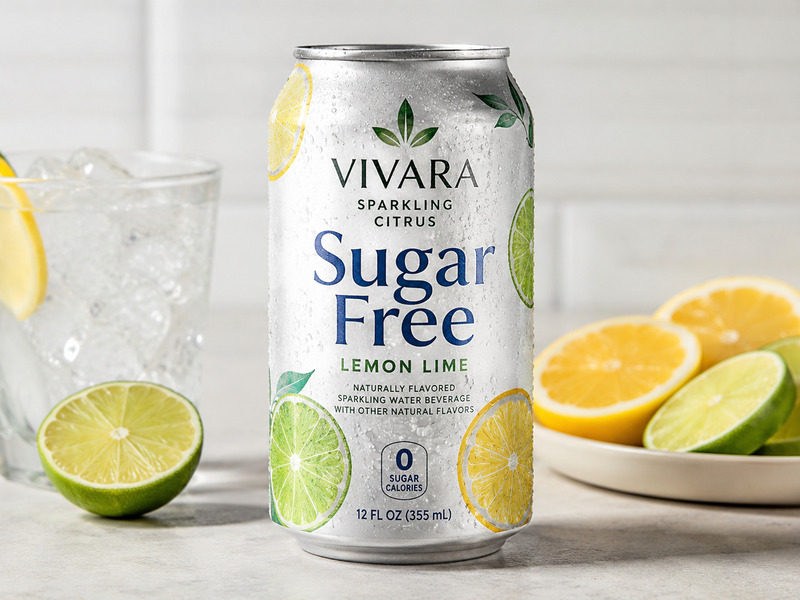
This one sounds like the strongest claim of the three. And legally, it is the most specific. The FDA defines “sugar-free” as containing less than 0.5 grams of sugar per serving.
That is a very low threshold. So when a product says sugar-free, it genuinely contains almost no sugar at all. However, and this is important, sugar-free does not mean calorie-free or sweetener-free.
Common sweeteners used in sugar-free products
Most sugar-free products use substitutes to keep the sweetness. These typically include:
- Artificial sweeteners such as aspartame, sucralose, or saccharin
- Sugar alcohols like erythritol, xylitol, or maltitol
- Natural sweeteners like stevia or monk fruit extract
What “unsweetened” actually means
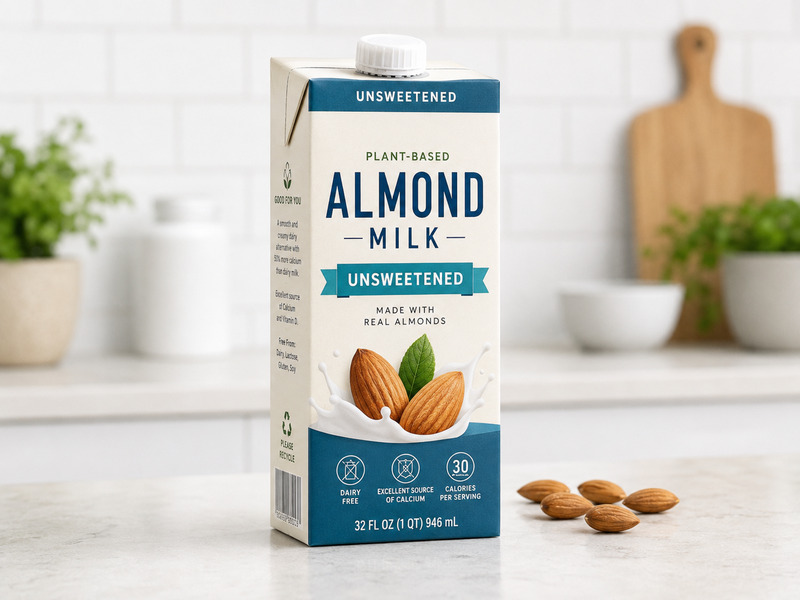
“Unsweetened” is the most straightforward of the three and often the most honest label on the shelf. An unsweetened product contains no added sugars and no sweeteners of any kind.
No artificial sweeteners, no stevia, no sugar alcohols. Nothing was added to make it taste sweet.
Natural sugars can still be present
What it may still contain is naturally occurring sugar from the ingredients themselves. Unsweetened almond milk, for example, has very little natural sugar. Unsweetened applesauce still has the natural fruit sugars from apples.
How “unsweetened” differs from “no sugar added”
The key difference is this: unsweetened products contain no sweetening agents whatsoever, while “no sugar added” products may still include fruit juice concentrate, which adds sweetness even though it is technically not “sugar.”
Unsweetened is the label you will most commonly see on:
- Plant-based milks (almond, oat, soy)
- Cocoa powder and baking chocolate
- Canned tomatoes and tomato paste
- Plain Greek yogurt (in some markets)
- Applesauce and pureed fruits
For people managing blood sugar, following a low-carb or ketogenic diet, or simply reducing sweetness in their meals, unsweetened products are often the cleanest available choice.
Side-by-side comparison: the key differences at a glance
| Feature / Label Meaning | No Sugar Added | Sugar-Free | Unsweetened |
| Definition | No sugar or sugar-containing ingredients added during processing | Contains less than 0.5g of sugar per serving | No added sugars or sweetening agents of any kind |
| Added sugar | Not added, but may still be present naturally | None (or negligible <0.5g) | None |
| Natural sugars | Can be high (e.g., fruit juices) | May be present depending on ingredients | May be present naturally (minimal in most cases) |
| Sweeteners allowed | Yes (e.g., fruit concentrates in some cases) | Yes (artificial, sugar alcohols, or non-nutritive sweeteners) | No sweeteners allowed at all |
| Taste profile | May still taste sweet due to natural sugars | Often tastes sweet due to substitutes | Usually not sweet |
| Common products | Fruit juice, yogurt, cereal, canned fruit | Diet sodas, sugar-free candy, protein bars | Plant milks, cocoa powder, tomato paste |
| Best for | Reducing added sugar intake | Strict low-carb/diabetic diets | Cleanest, least processed option |
Which one should you choose?
Not all food labels mean the same thing, and understanding the difference is important before making a choice. To make informed decisions, it helps to understand what each label truly means and when it should be preferred.
Choose unsweetened if:
You want the fewest additives possible. It gives you the most natural version of a food with the least processing or intervention.
Choose sugar-free if:
You are on a strict low-carb or diabetic-friendly diet, and total sugar grams matter most. Check for sugar alcohols if you have digestive sensitivity.
Choose no sugar added if:
You are simply avoiding extra sugar being added to a food, but you are comfortable with some naturally occurring sugar from the ingredients.
One rule that applies to all three
None of these labels automatically makes a product healthy. A sugar-free candy bar may have fewer carbs but more fat. An unsweetened yogurt may be low in sugar but high in sodium. Always check the full Nutrition Facts panels, not just the front-of-package claim.
The FDA’s resource on added sugars and the updated Nutrition Facts label is worth bookmarking. It explains exactly how to find and interpret added sugar information on any packaged food.
The upshot
These three labels are not interchangeable, and the food industry knows that confusion works in its favor.
- No sugar added means no extra sugar was put in, but the food may still be naturally high in sugar.
- Sugar-free means less than 0.5g of sugar per serving, but sweeteners are almost always used instead.
- Unsweetened means nothing was added to sweeten it at all.
The next time you pick up a product with one of these claims, flip it over. Look at total sugars, added sugars, and the ingredients list.
That three-second habit is the most powerful tool you have for making smarter food choices, no matter what the front of the package says.